Brand Activation

Fera

Sole designer on Fera's event presence across major activations — a national conference & a Westminster policy day — owning every touchpoint from concept to print-ready production.

Fera Live 2026

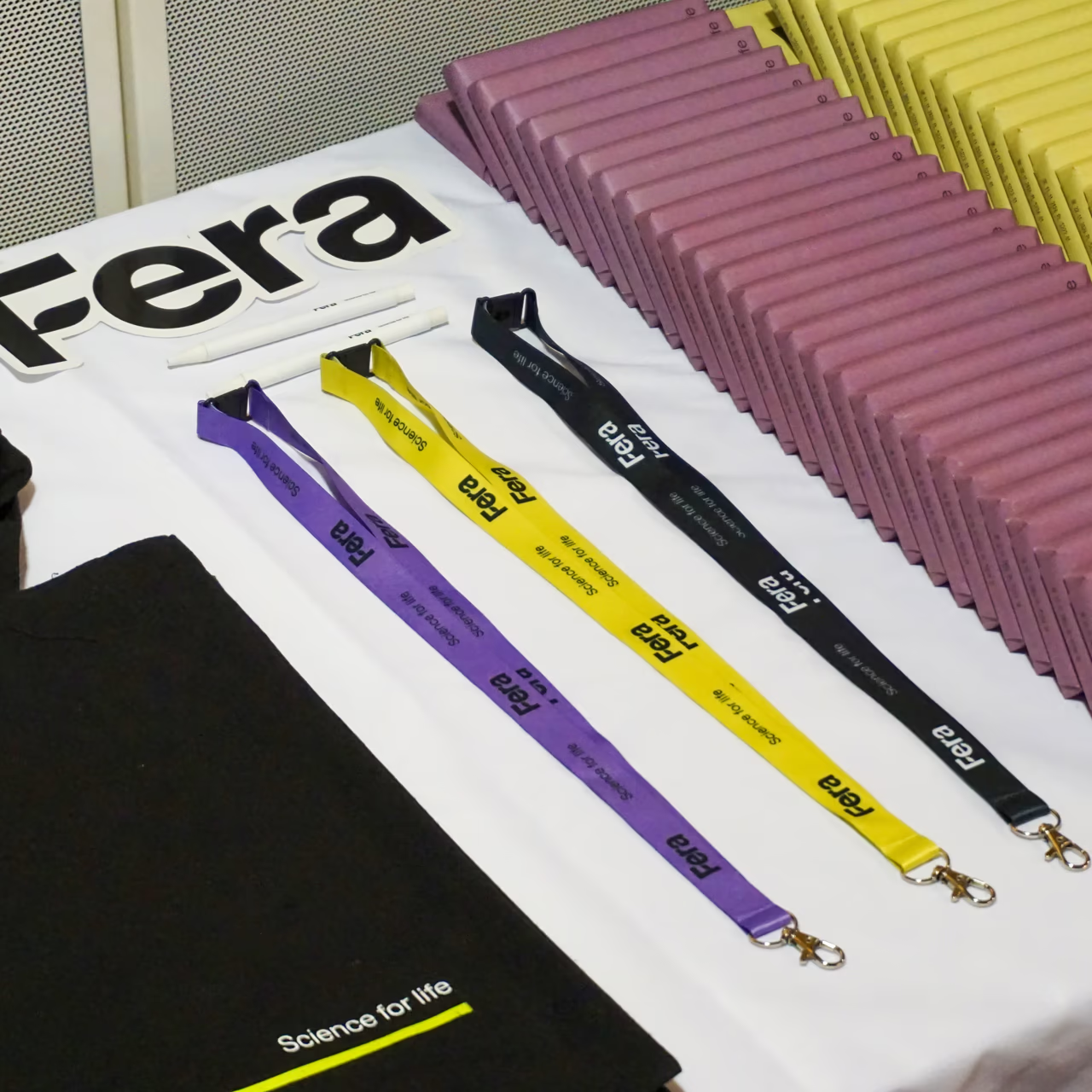
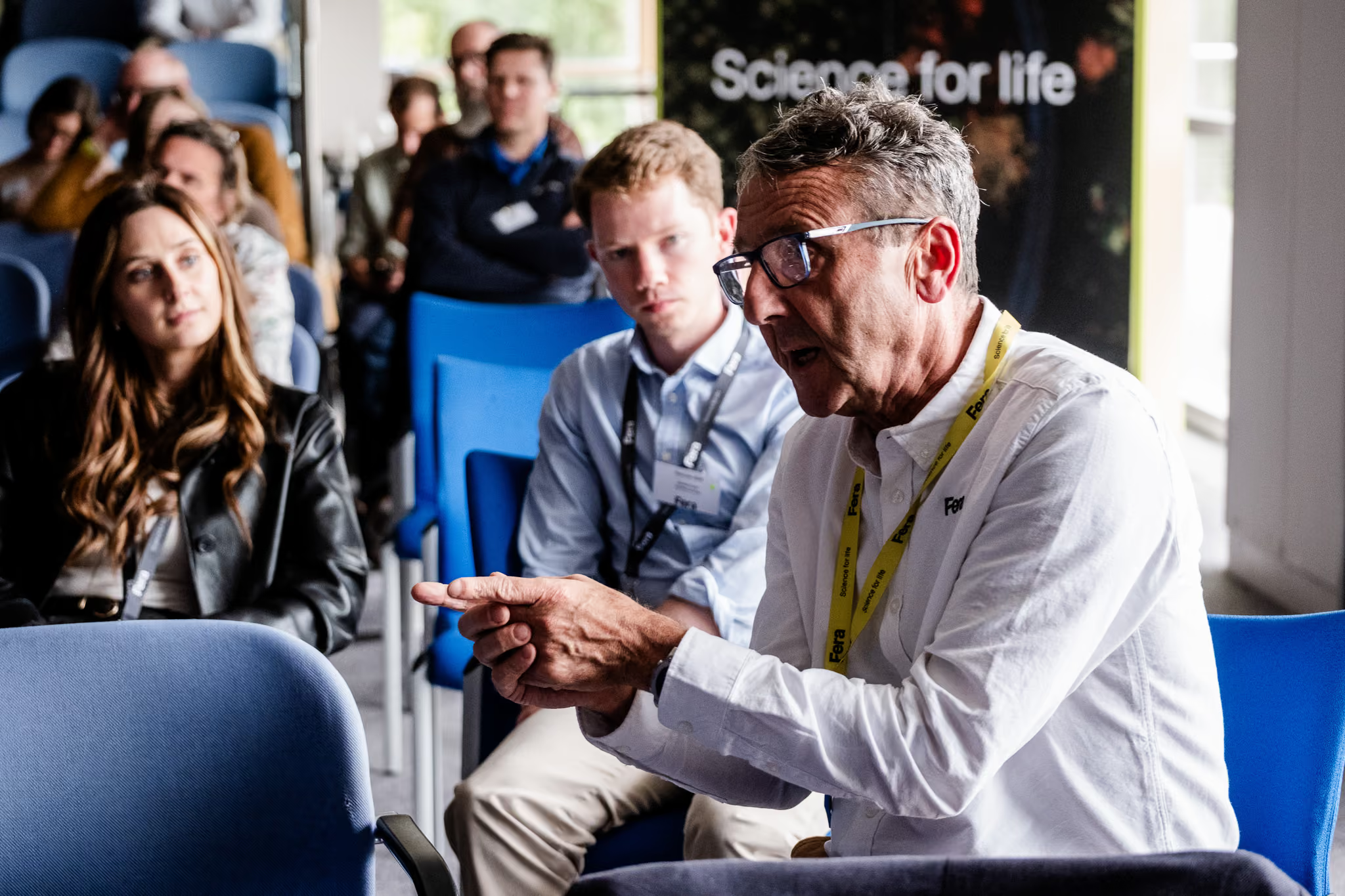
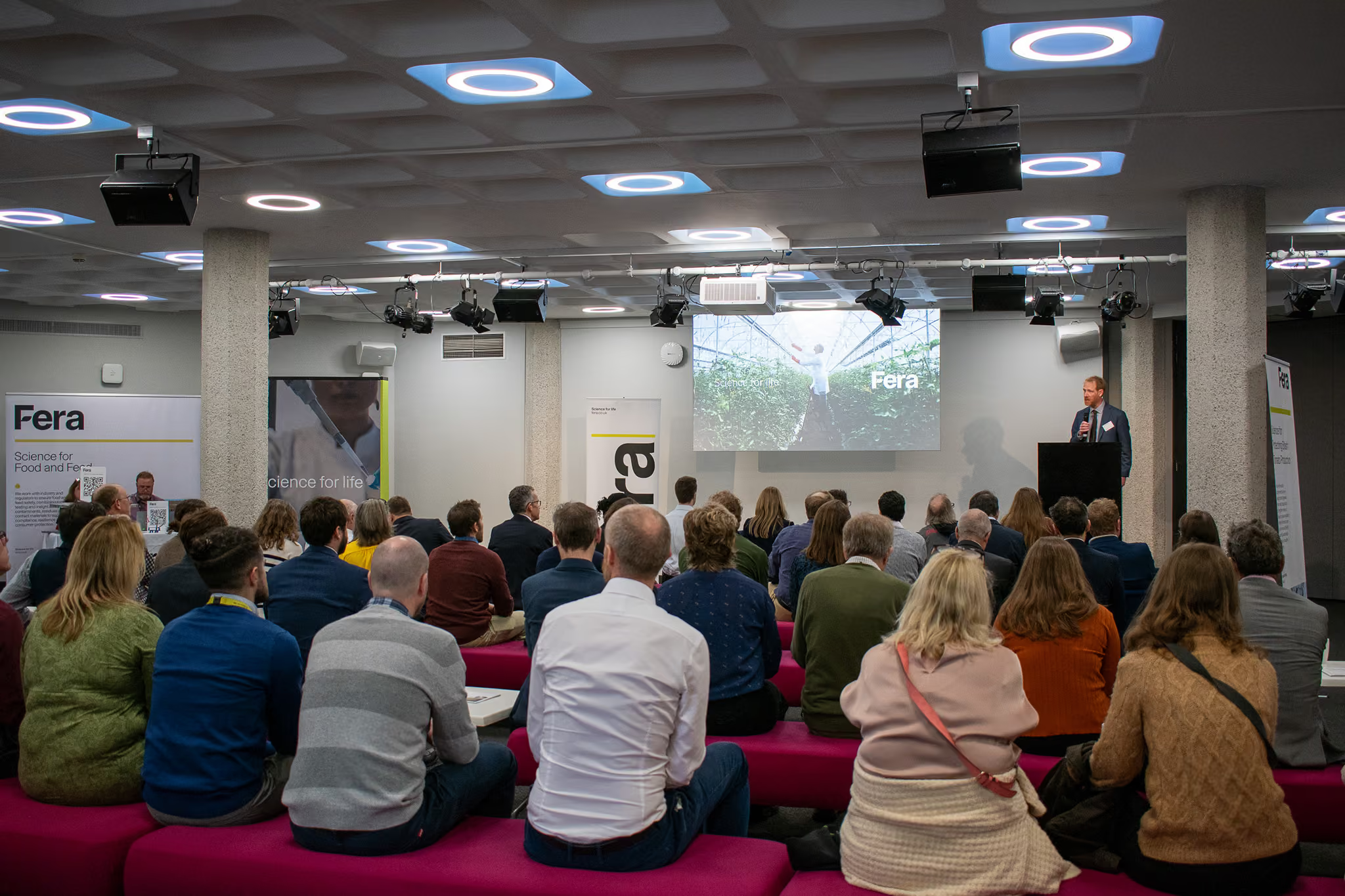
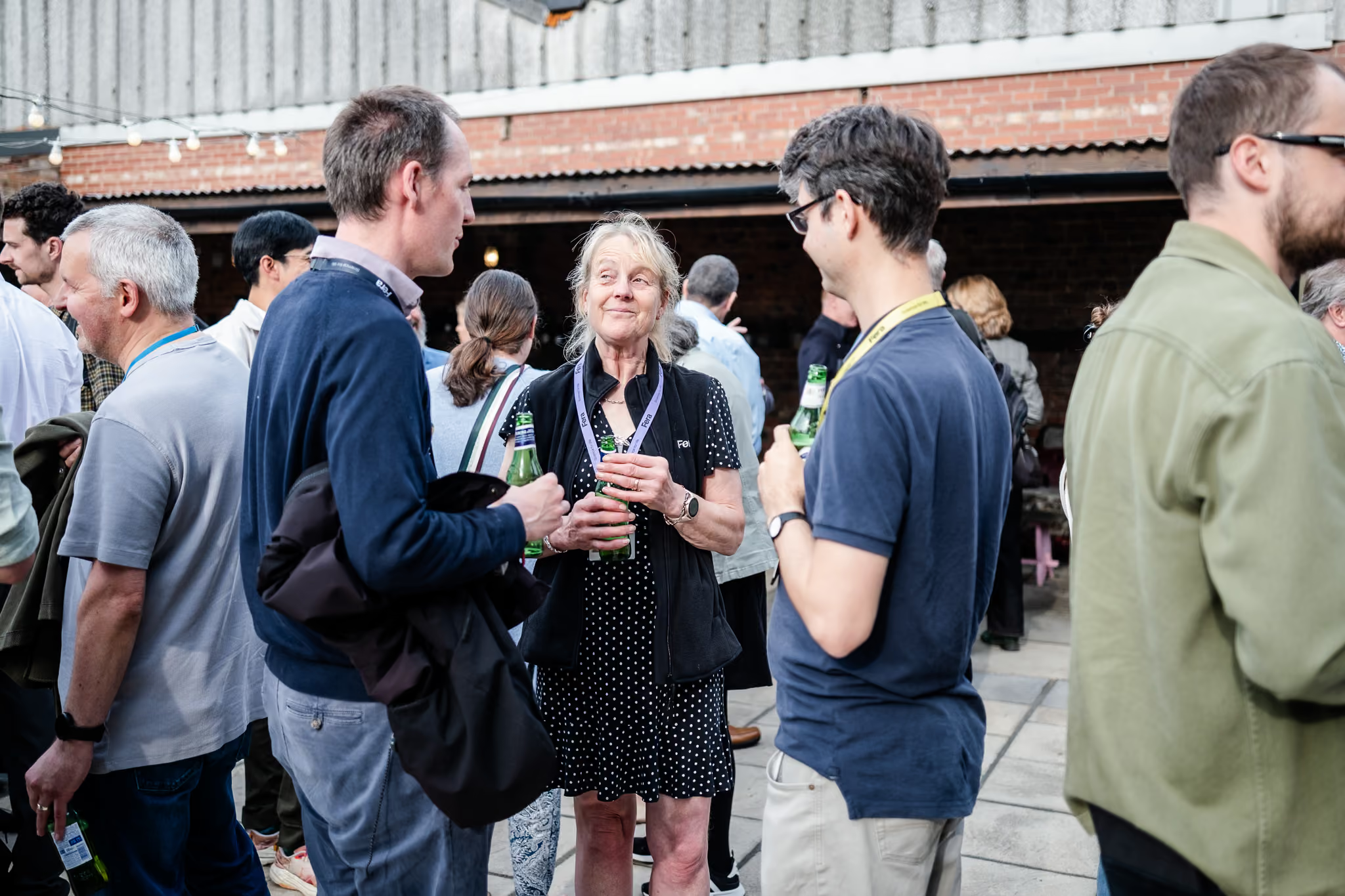
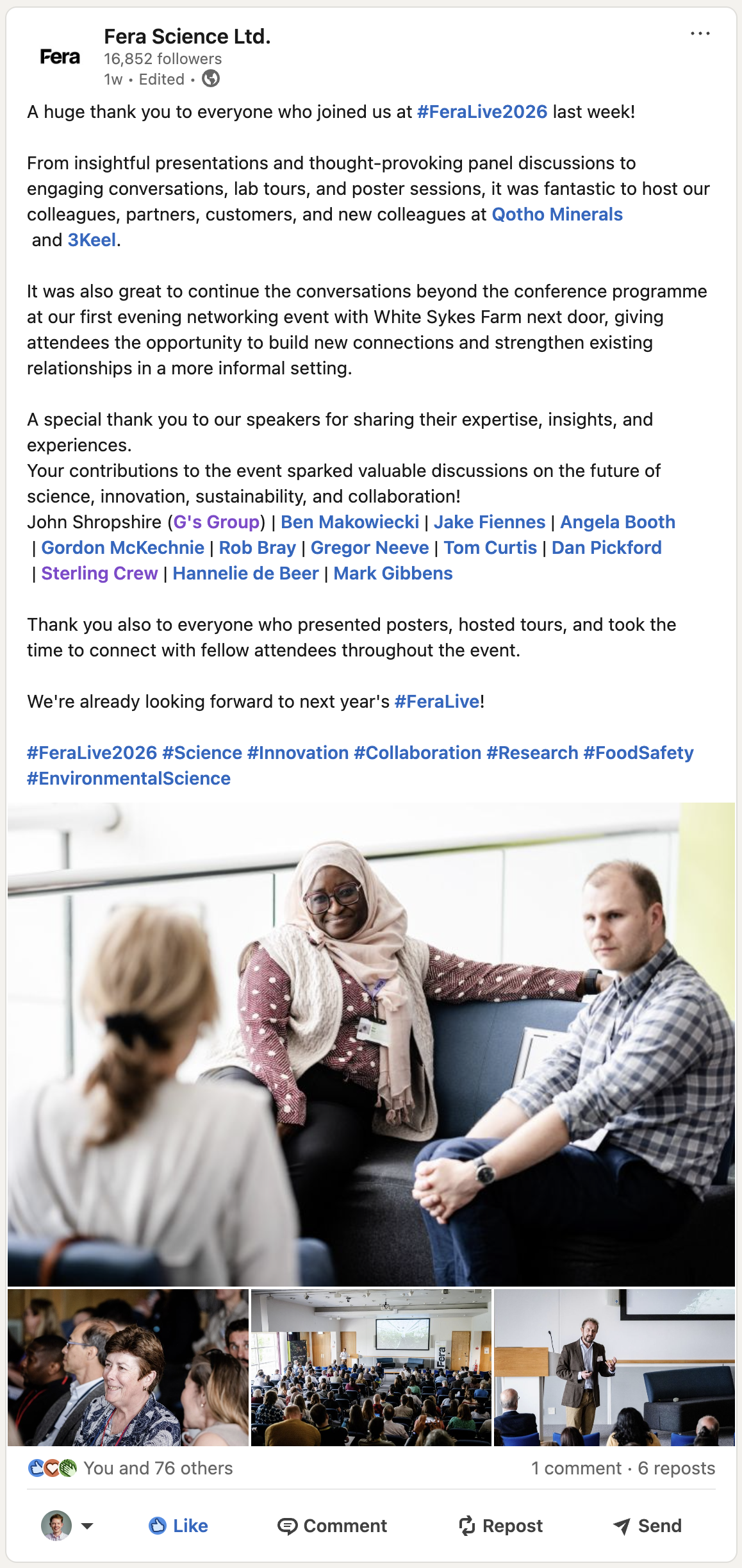
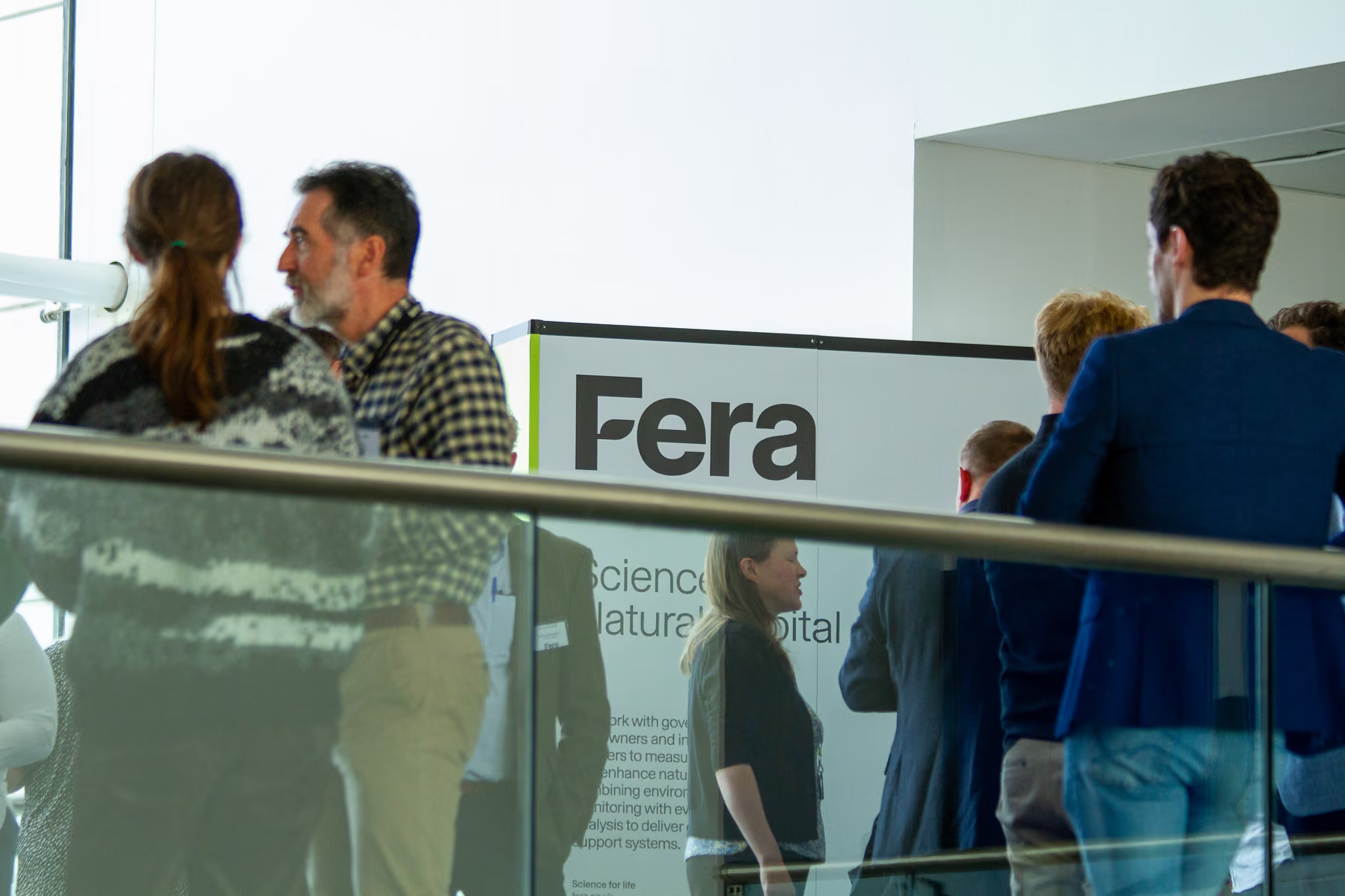
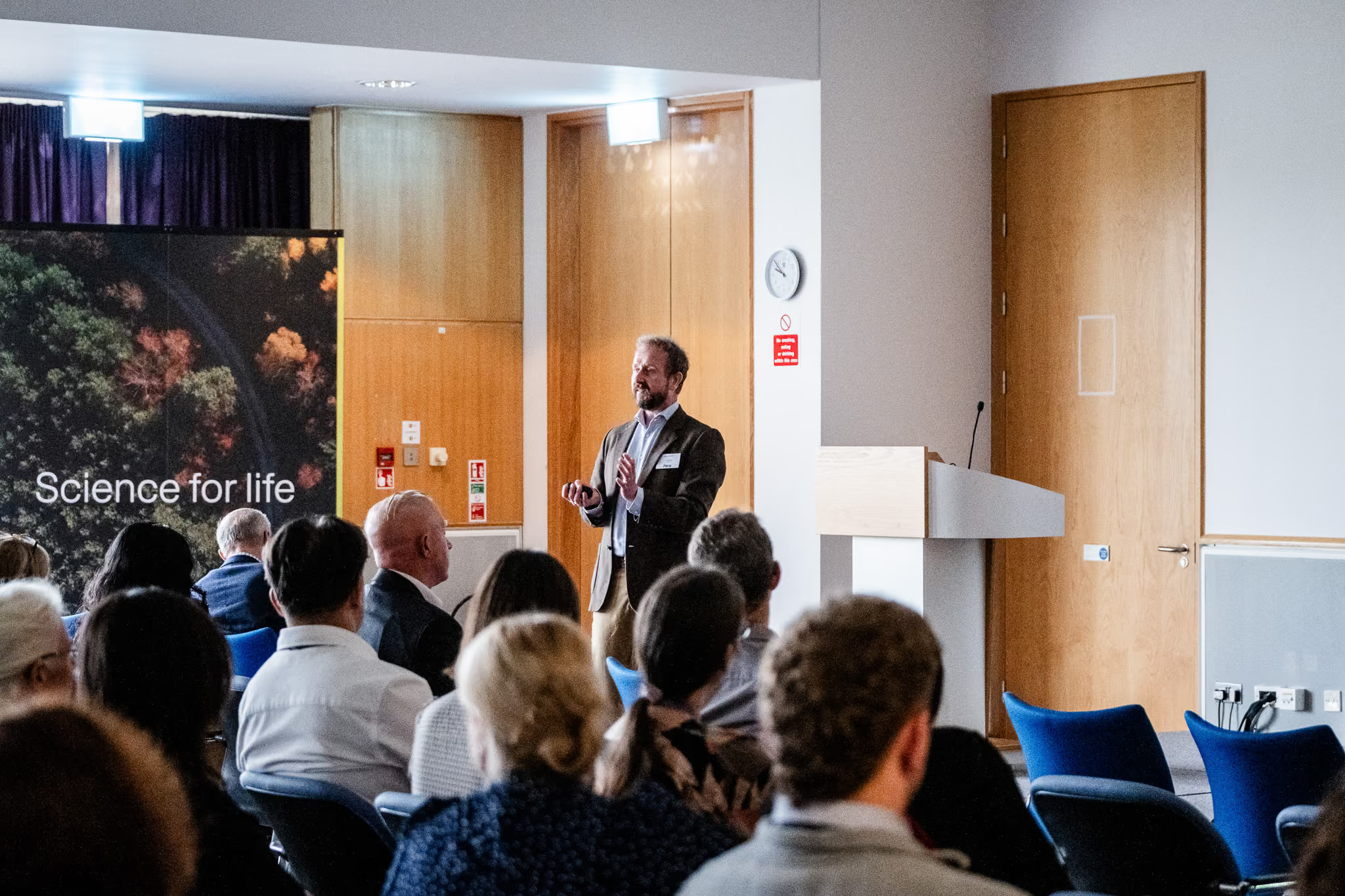
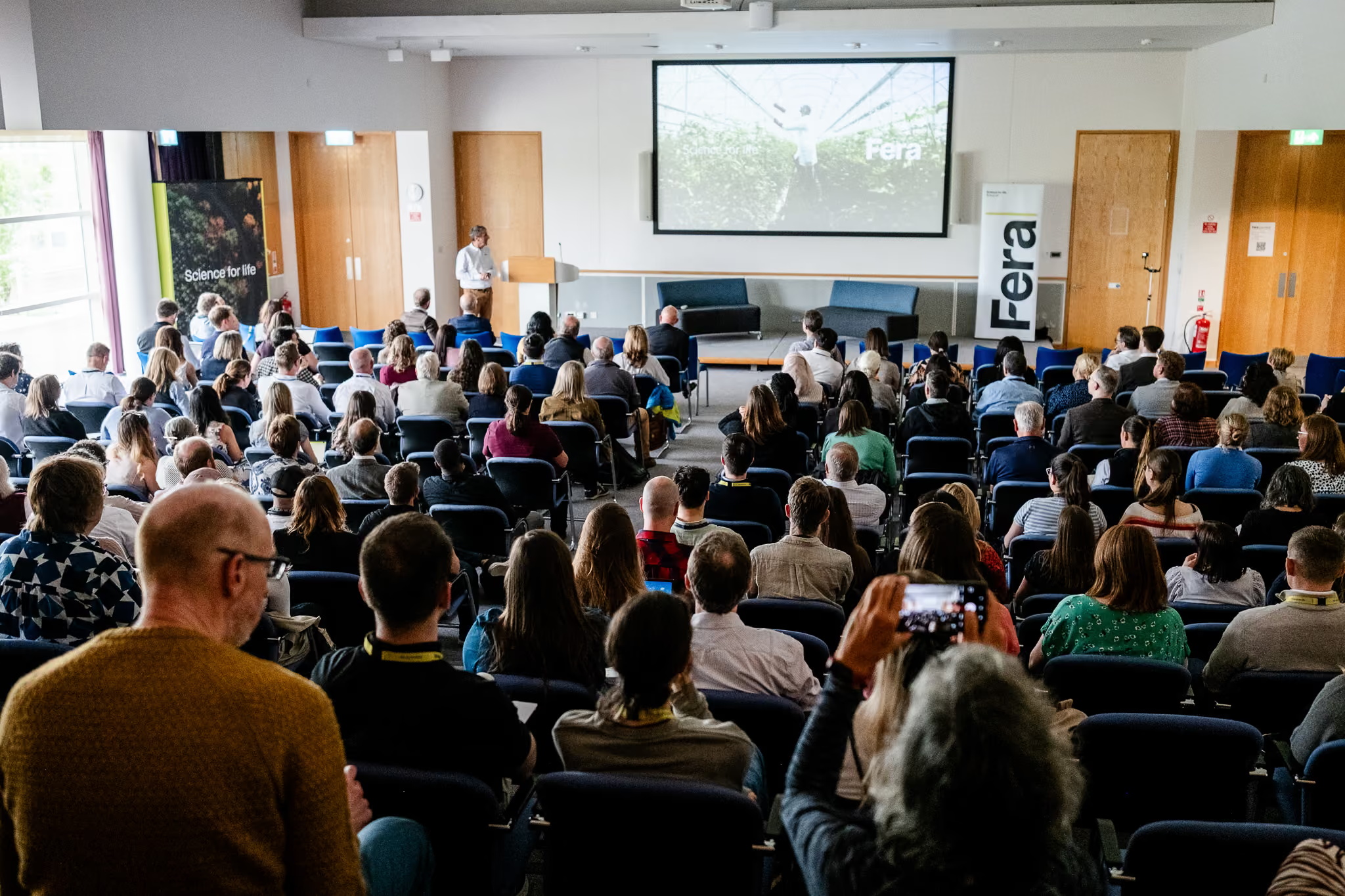
Fera's annual conference brought colleagues, partners, and customers to the York campus for a day of talks, panels, lab tours, and poster sessions, capped by an evening networking event. I designed the brand across the whole day — stage backdrops, wayfinding, printed programmes, lanyards, wristbands, and exhibition materials — turning the campus into a single coherent branded environment.

A detail I'm proud of: the wristbands were eco-friendly seed paper. Once the day was done, guests could plant them and grow flowers — a small sustainability touch that fit Fera's science-for-nature mission.

Fera Innovation Day — QEII Centre, London

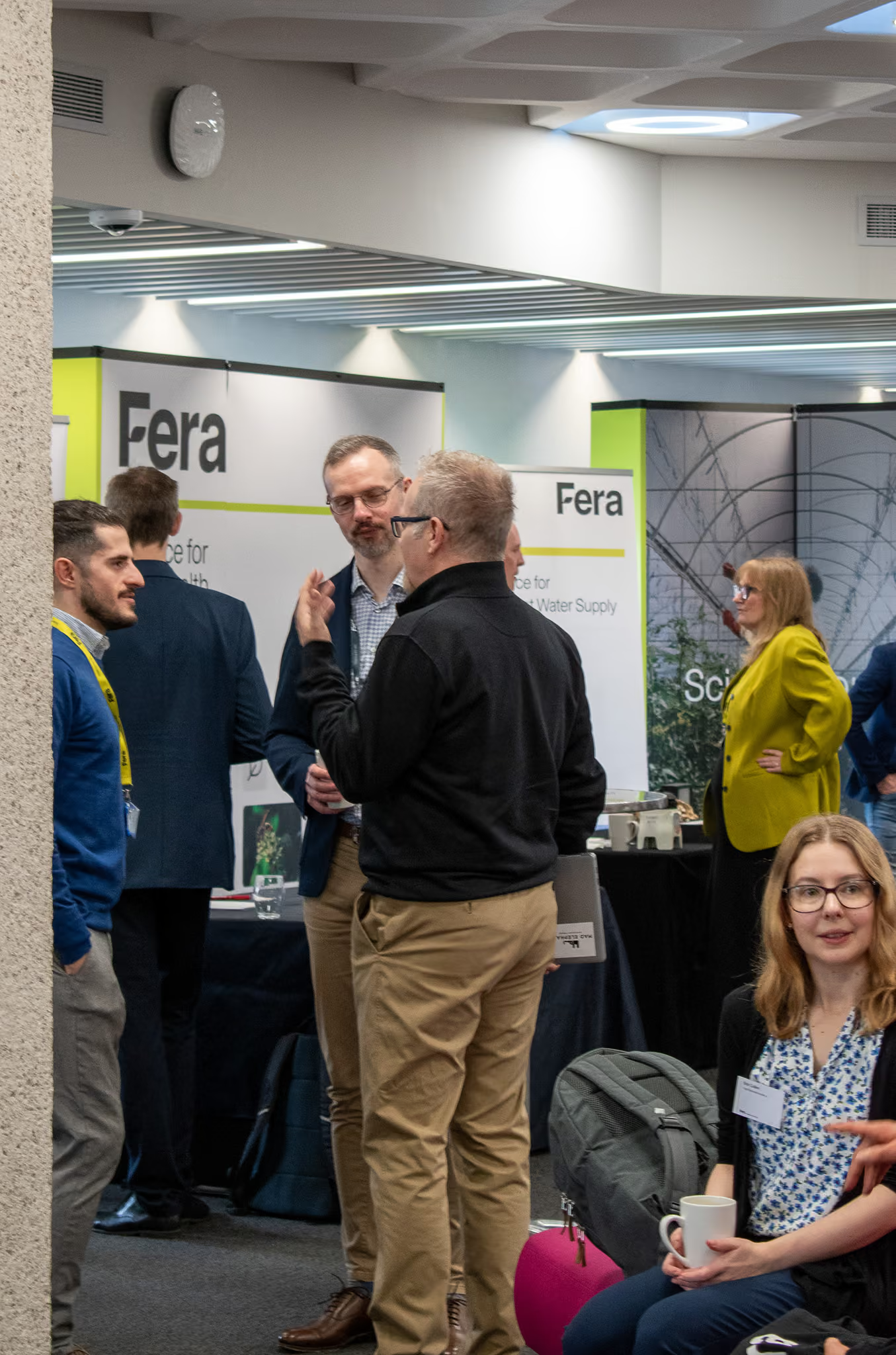
A day of policy and science discussion in London, attended by ministers, MPs, and industry representatives.

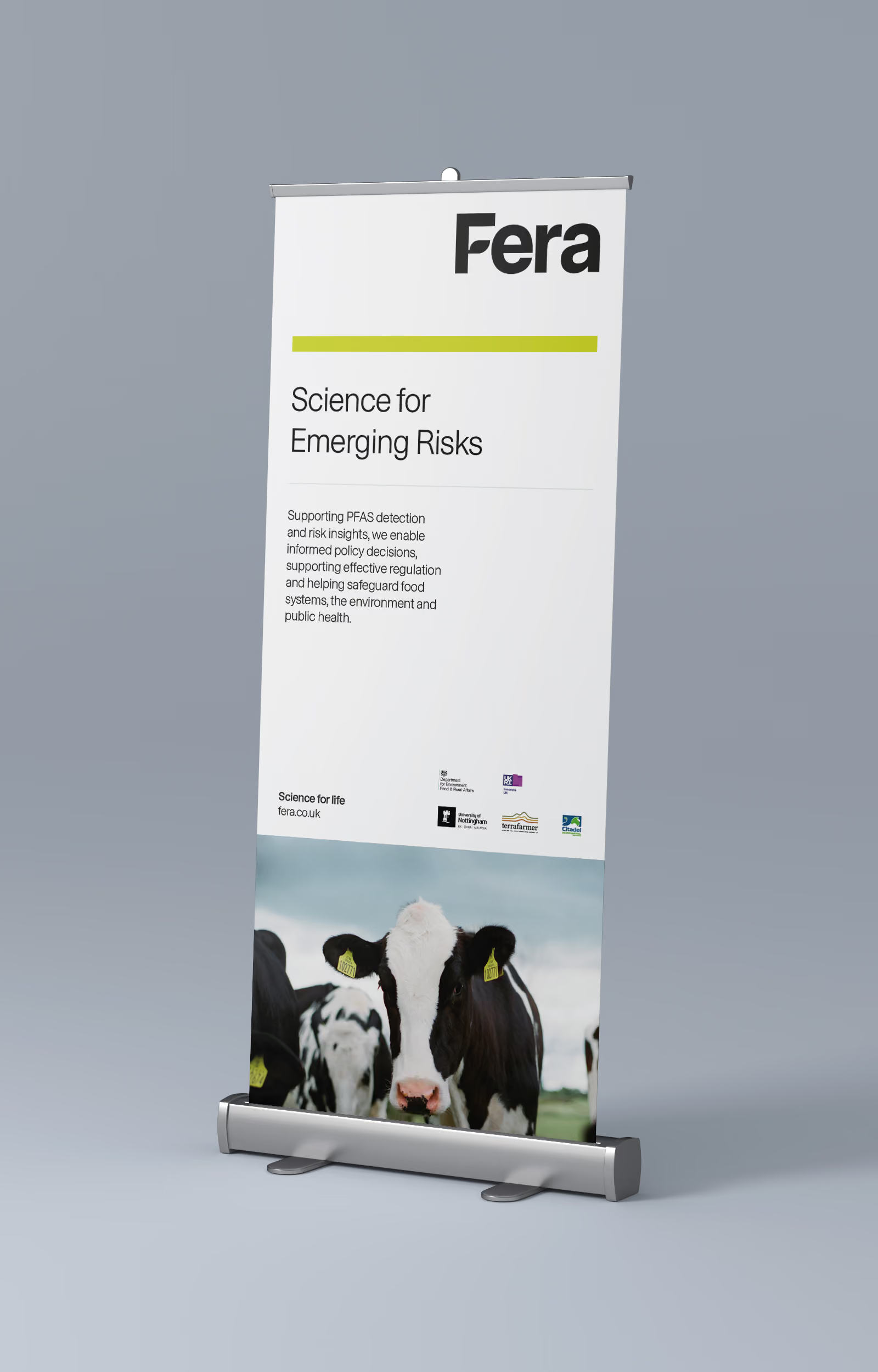
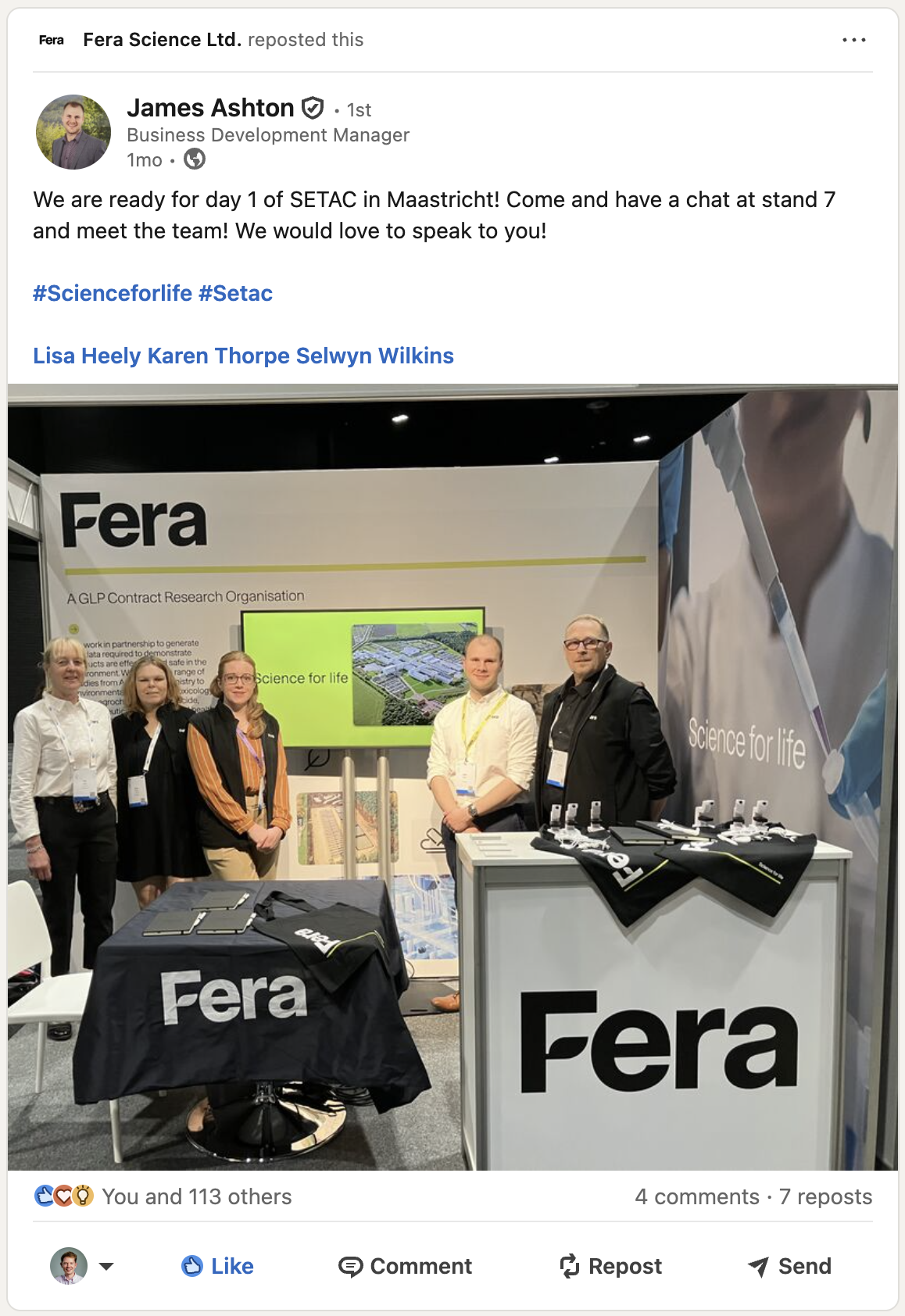
The problem: Historically, every event Fera attended got its own bespoke stand — banners designed from scratch, packed with copy, tailored so tightly to one occasion they couldn't be used again. Each event cost around £1,000 to kit out: roughly £100 per pull-up banner and £850 for a large panel, all built for one day and binned afterwards. Expensive, slow to produce, and dated the moment the event ended.

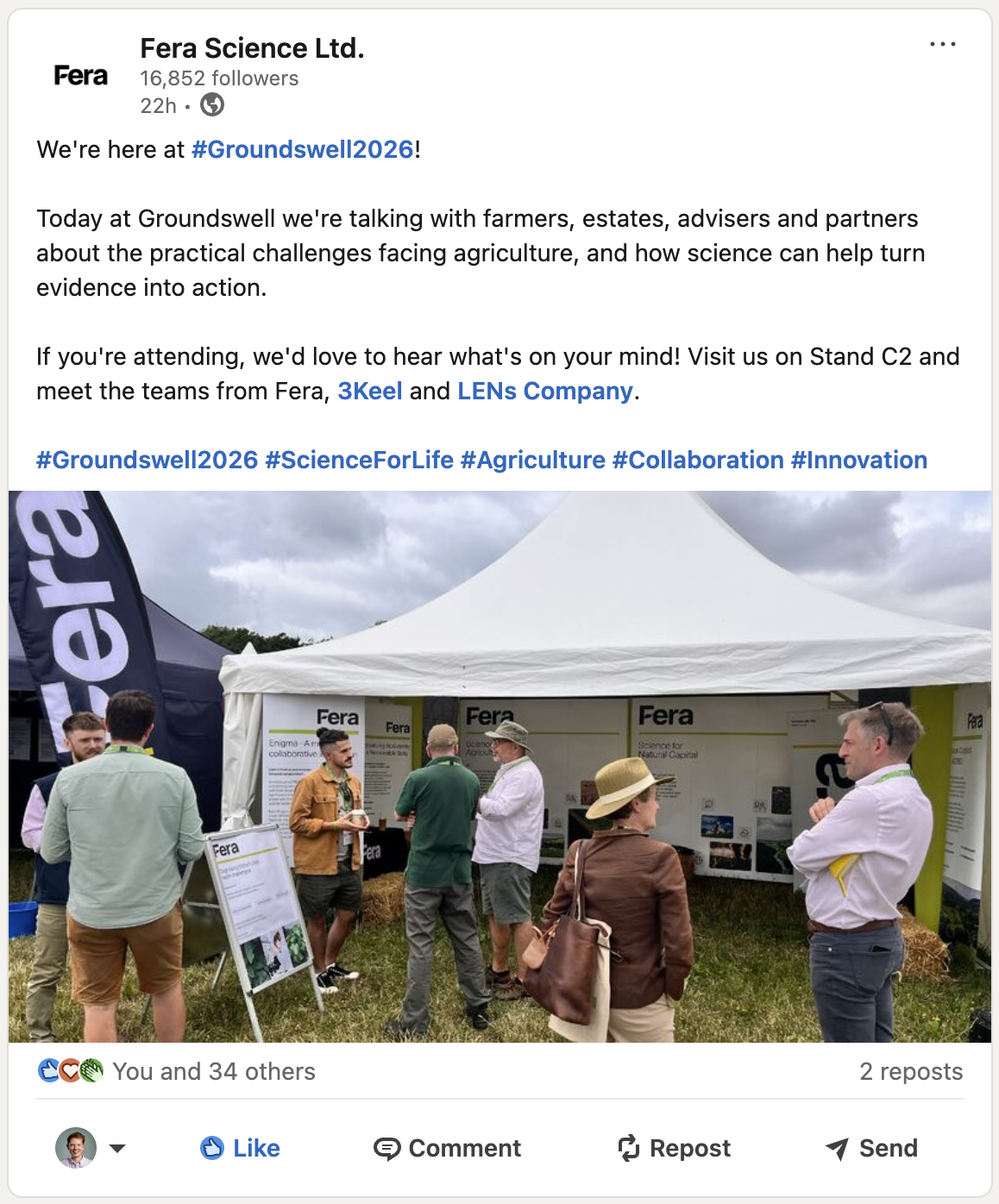
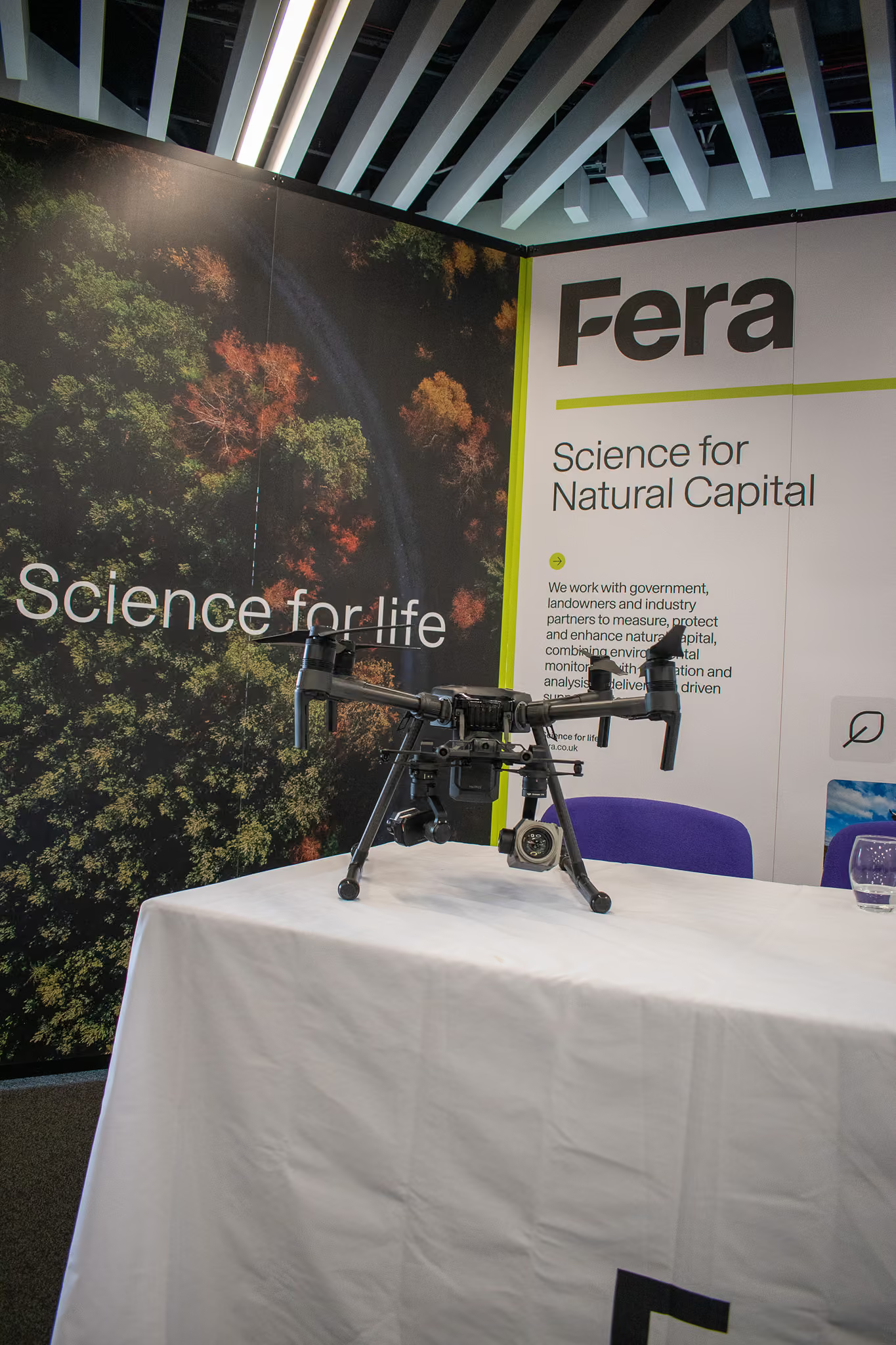
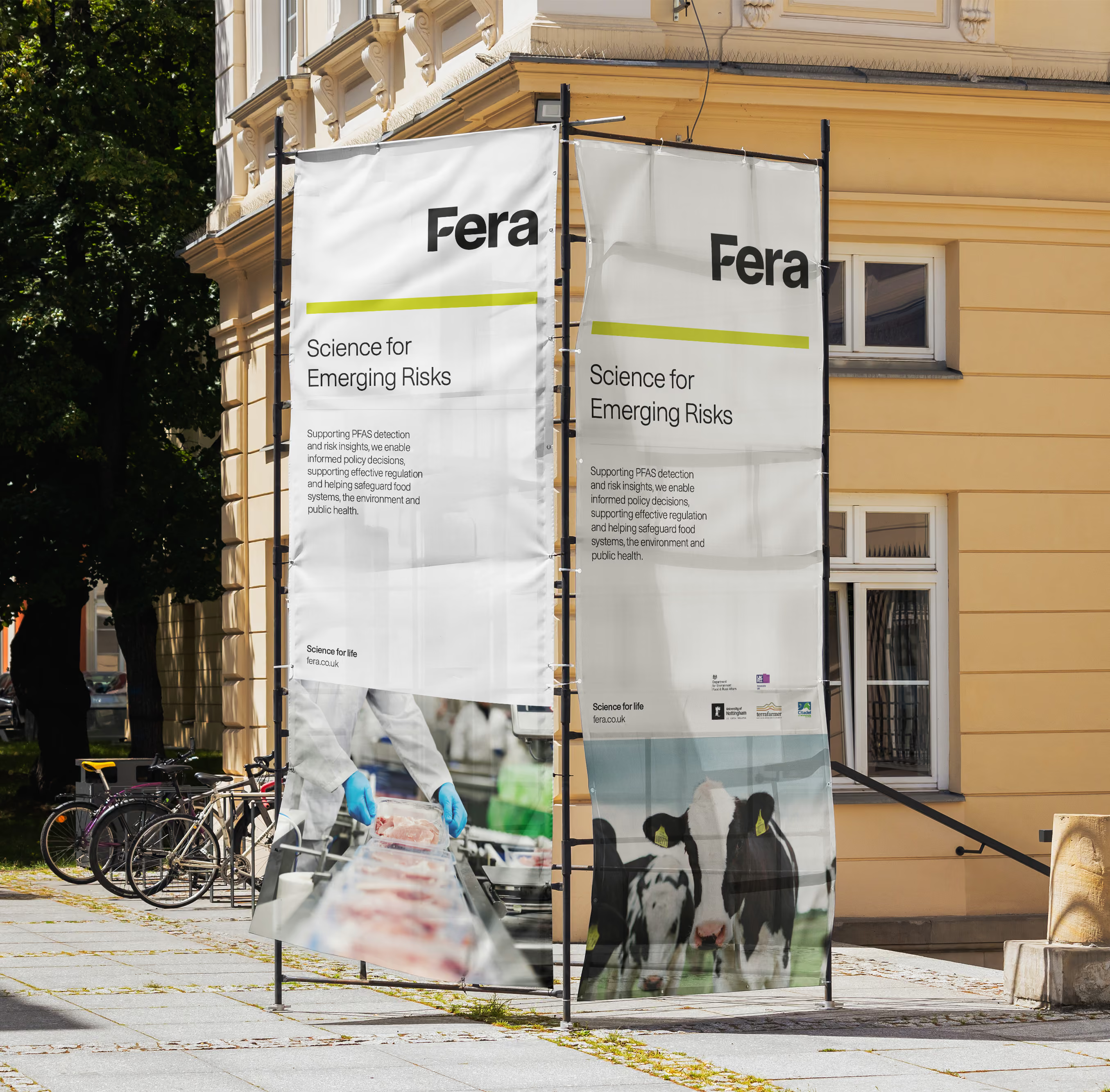
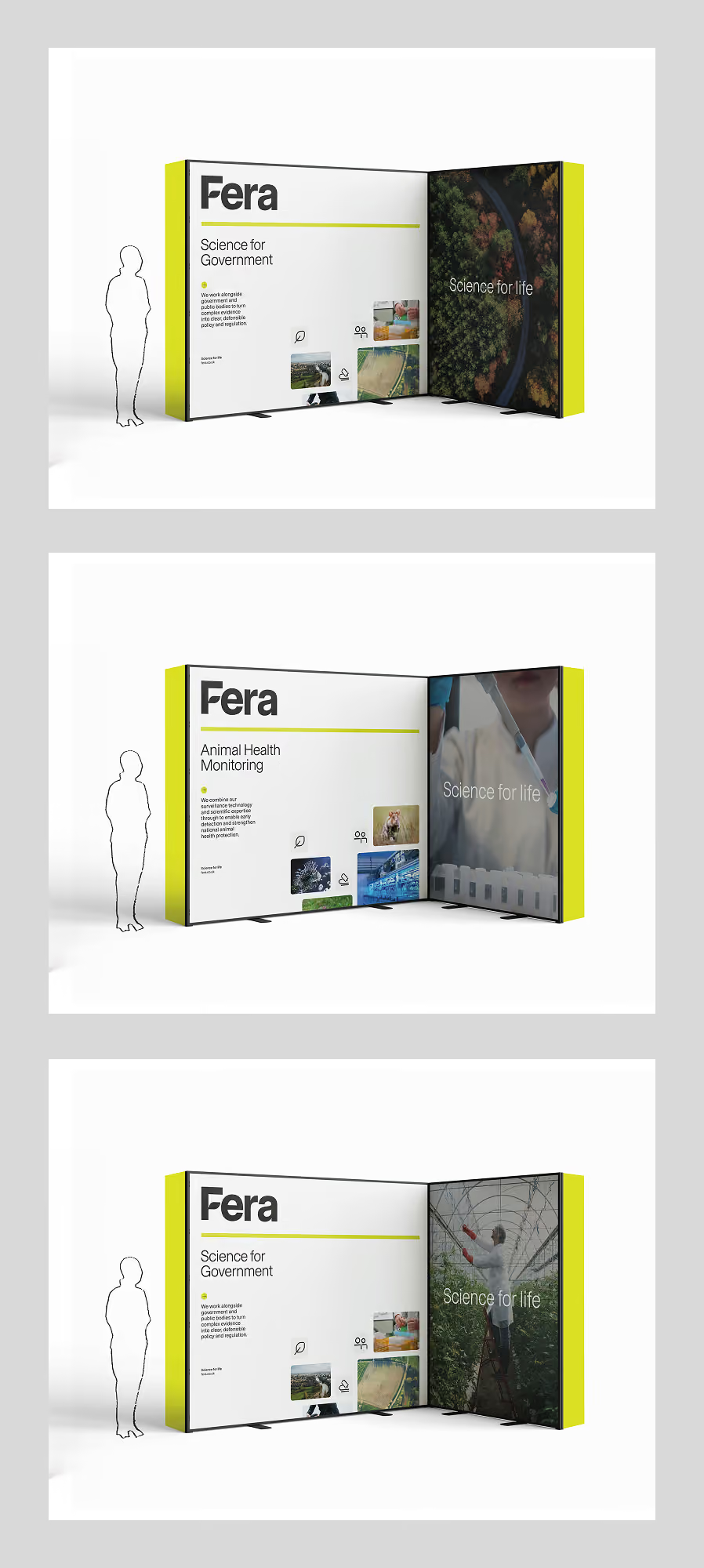
What I did: I designed a modular exhibition stand system — interchangeable panels covering Science for Government, Animal Health Monitoring, Natural Capital, and Emerging Risks — built to stand alone or lock together into one branded environment. Less copy, stronger visuals, and a structure that works for a room of ministers and MPs as easily as an industry crowd. I delivered the print, display graphics, and supporting collateral throughout.

The result: The modular system flipped the economics — build once, reuse everywhere, so most events since cost little to nothing to dress. Cheaper, faster to deploy, and better-looking than the wordy one-offs it replaced. A clear example of design thinking meeting a real business need.
No items found.

At a glance:

My role:

Web & Graphic designer

Organistaion:

Fera

Team:

Fera Marketing

Timeline:

2025 and 2026

Outcome:

Cut per-event stand costs from ~£1,000 to near-zero by replacing bespoke, single-use banners with one reusable modular system.

Brand Activation

Sole designer on Fera's event presence across major activations — a national conference & a Westminster policy day — owning every touchpoint from concept to print-ready production.

At a glance:

My role:

Web & Graphic designer

Organistaion:

Fera

Team:

Fera Marketing

Timeline:

2025 and 2026

Outcome:

Cut per-event stand costs from ~£1,000 to near-zero by replacing bespoke, single-use banners with one reusable modular system.

Fera Live 2026

Fera's annual conference brought colleagues, partners, and customers to the York campus for a day of talks, panels, lab tours, and poster sessions, capped by an evening networking event. I designed the brand across the whole day — stage backdrops, wayfinding, printed programmes, lanyards, wristbands, and exhibition materials — turning the campus into a single coherent branded environment.

A detail I'm proud of: the wristbands were eco-friendly seed paper. Once the day was done, guests could plant them and grow flowers — a small sustainability touch that fit Fera's science-for-nature mission.

Fera Innovation Day — QEII Centre, London

A day of policy and science discussion in London, attended by ministers, MPs, and industry representatives.

The problem: Historically, every event Fera attended got its own bespoke stand — banners designed from scratch, packed with copy, tailored so tightly to one occasion they couldn't be used again. Each event cost around £1,000 to kit out: roughly £100 per pull-up banner and £850 for a large panel, all built for one day and binned afterwards. Expensive, slow to produce, and dated the moment the event ended.

What I did: I designed a modular exhibition stand system — interchangeable panels covering Science for Government, Animal Health Monitoring, Natural Capital, and Emerging Risks — built to stand alone or lock together into one branded environment. Less copy, stronger visuals, and a structure that works for a room of ministers and MPs as easily as an industry crowd. I delivered the print, display graphics, and supporting collateral throughout.

The result: The modular system flipped the economics — build once, reuse everywhere, so most events since cost little to nothing to dress. Cheaper, faster to deploy, and better-looking than the wordy one-offs it replaced. A clear example of design thinking meeting a real business need.
No items found.
No items found.