Fera publishes data that carries legal weight. I helped design the system it runs on, restructured a thousand pages into something people could actually find, and built an AI tool so the whole team could produce the content — not just me. And I did it inside an organisation that had to be brought along with the work as much as the work itself had to be built.
Fera is a DEFRA and Bridgepoint partnership in food safety, crop health, ecotoxicology and environmental research — a regulated sector, where getting it wrong has consequences.
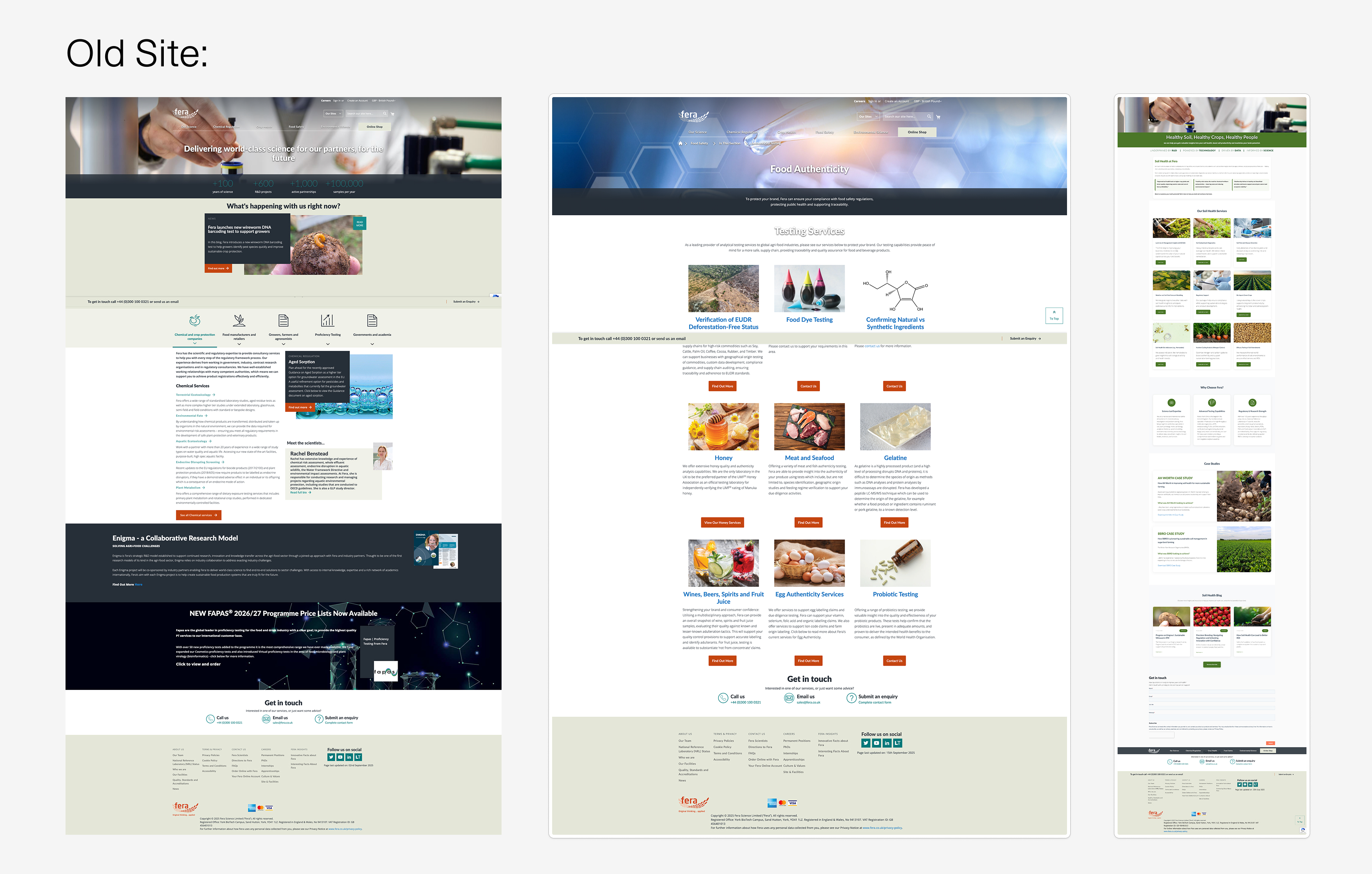
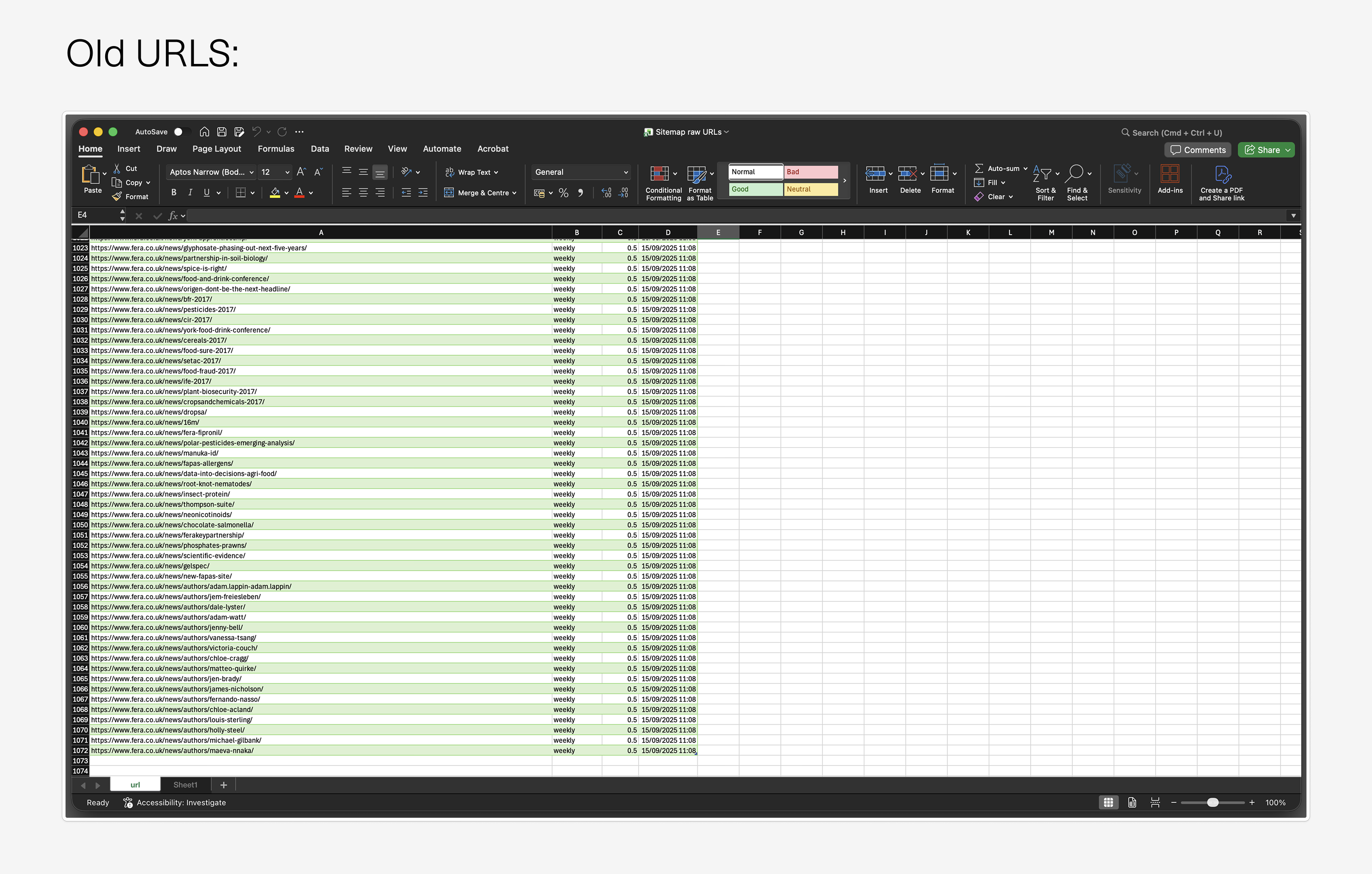
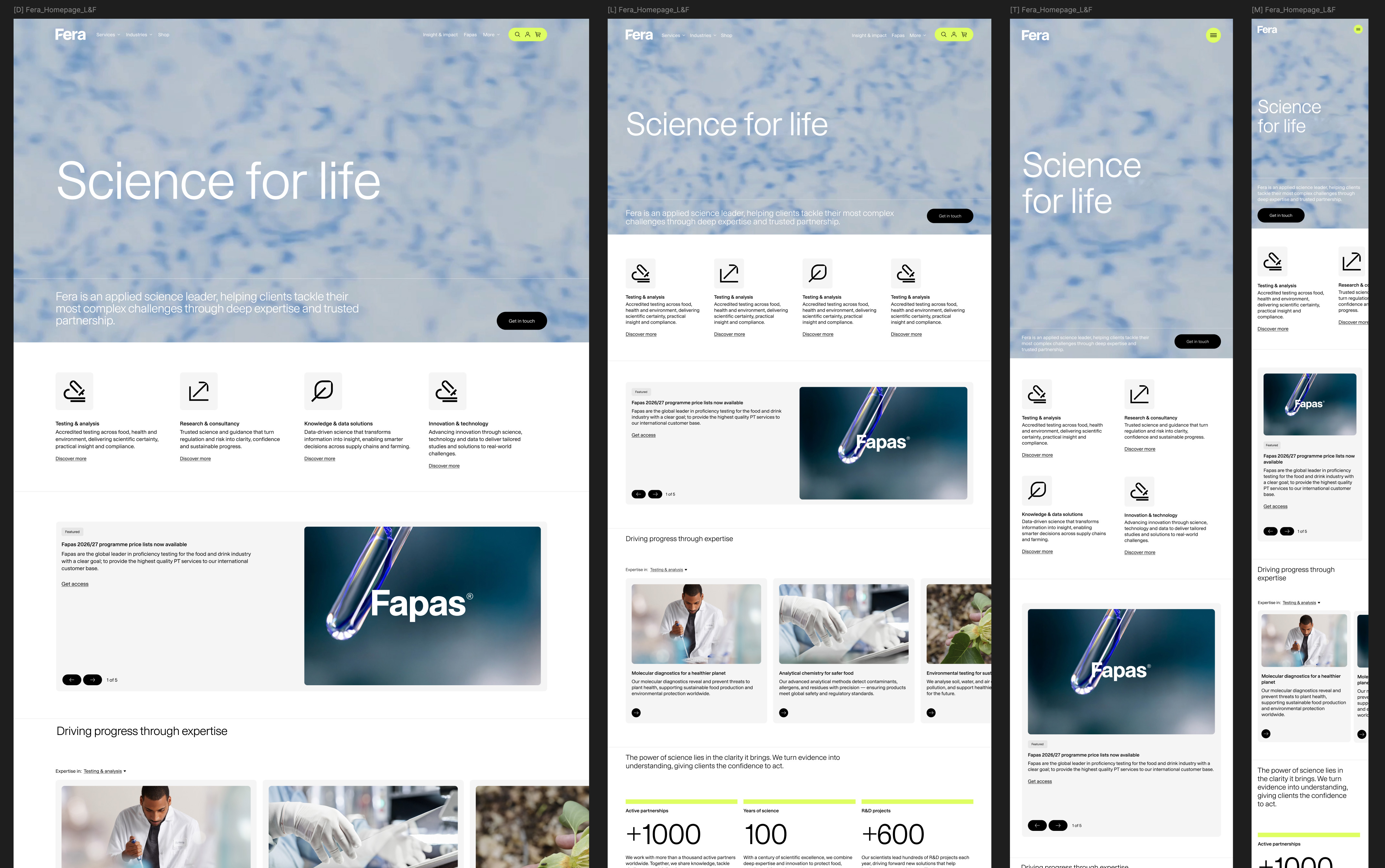
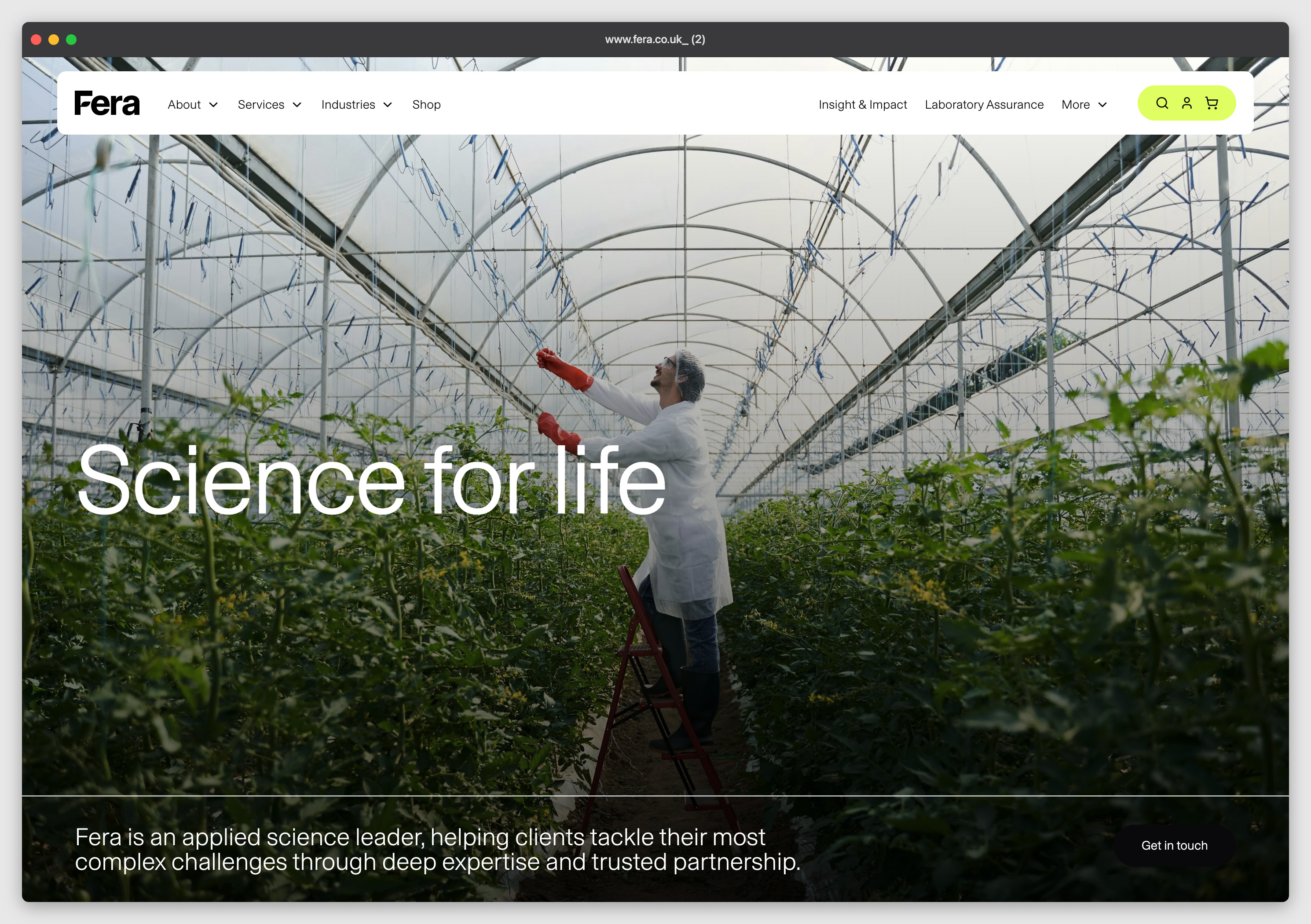
Fera was rebuilding its whole web presence from scratch: new brand, new CMS, new component library. The estate had grown past 1,000 pages across two domains — disjointed content, inconsistent styling, weak SEO, and no design system holding it together. Almost no page followed the same pattern twice. There was no internal design function. I was it.
But the technical mess was only half of it. This was a rebrand under real pressure, and the pressure was as much political as practical: senior leadership kept changing, internal understanding of what brand actually does was thin, and investors were watching for it to land. So alongside the design problem there was a people problem — bringing a sceptical, shifting organisation along with the work.
Two things made the design side more than a redesign. First, the pages weren't just dated — they were unfindable. No clear information architecture, content buried and structured differently everywhere. Fix the design without fixing the structure, and the mess just moves house.
Second, the maths didn't work. Under the old process a single page took about a day to write, and it still came out dense and hard to read. It then went to the scientists, who sent back heavy revisions. A section — one top page and four sub-pages — could swallow the best part of a week before it was even accurate. One designer, a thousand pages, a regulated sector, and a launch date: sitting inside every page was never going to happen in time.
No items found.
At a glance:
My role:
Embedded from day one. Co-designed the system and site with Only, then owned the content migration, and the live platform. Built an AI tool the marketing team uses to ship on-brand pages without a designer.
Organistaion:
Fera
Team:
Only (external studio), a developer, the marketing team, and Fera's scientists, who verified every page. I reported into the CCO's function.
Timeline:
May 2025 - May 2026
Outcome:
1,000+ tangled legacy pages became ~200 clear, findable ones — verified by the scientists themselves. A fast, on-brand site, plus a repeatable way for the team to keep building it.
A website, a design system, and an AI tool to build it
Fera publishes data that carries legal weight. I helped design the system it runs on, restructured a thousand pages into something people could actually find, and built an AI tool so the whole team could produce the content — not just me. And I did it inside an organisation that had to be brought along with the work as much as the work itself had to be built.
At a glance:
My role:
Embedded from day one. Co-designed the system and site with Only, then owned the content migration, and the live platform. Built an AI tool the marketing team uses to ship on-brand pages without a designer.
Organistaion:
Fera
Team:
Only (external studio), a developer, the marketing team, and Fera's scientists, who verified every page. I reported into the CCO's function.
Timeline:
May 2025 - May 2026
Outcome:
1,000+ tangled legacy pages became ~200 clear, findable ones — verified by the scientists themselves. A fast, on-brand site, plus a repeatable way for the team to keep building it.
Fera is a DEFRA and Bridgepoint partnership in food safety, crop health, ecotoxicology and environmental research — a regulated sector, where getting it wrong has consequences.
Fera was rebuilding its whole web presence from scratch: new brand, new CMS, new component library. The estate had grown past 1,000 pages across two domains — disjointed content, inconsistent styling, weak SEO, and no design system holding it together. Almost no page followed the same pattern twice. There was no internal design function. I was it.
But the technical mess was only half of it. This was a rebrand under real pressure, and the pressure was as much political as practical: senior leadership kept changing, internal understanding of what brand actually does was thin, and investors were watching for it to land. So alongside the design problem there was a people problem — bringing a sceptical, shifting organisation along with the work.
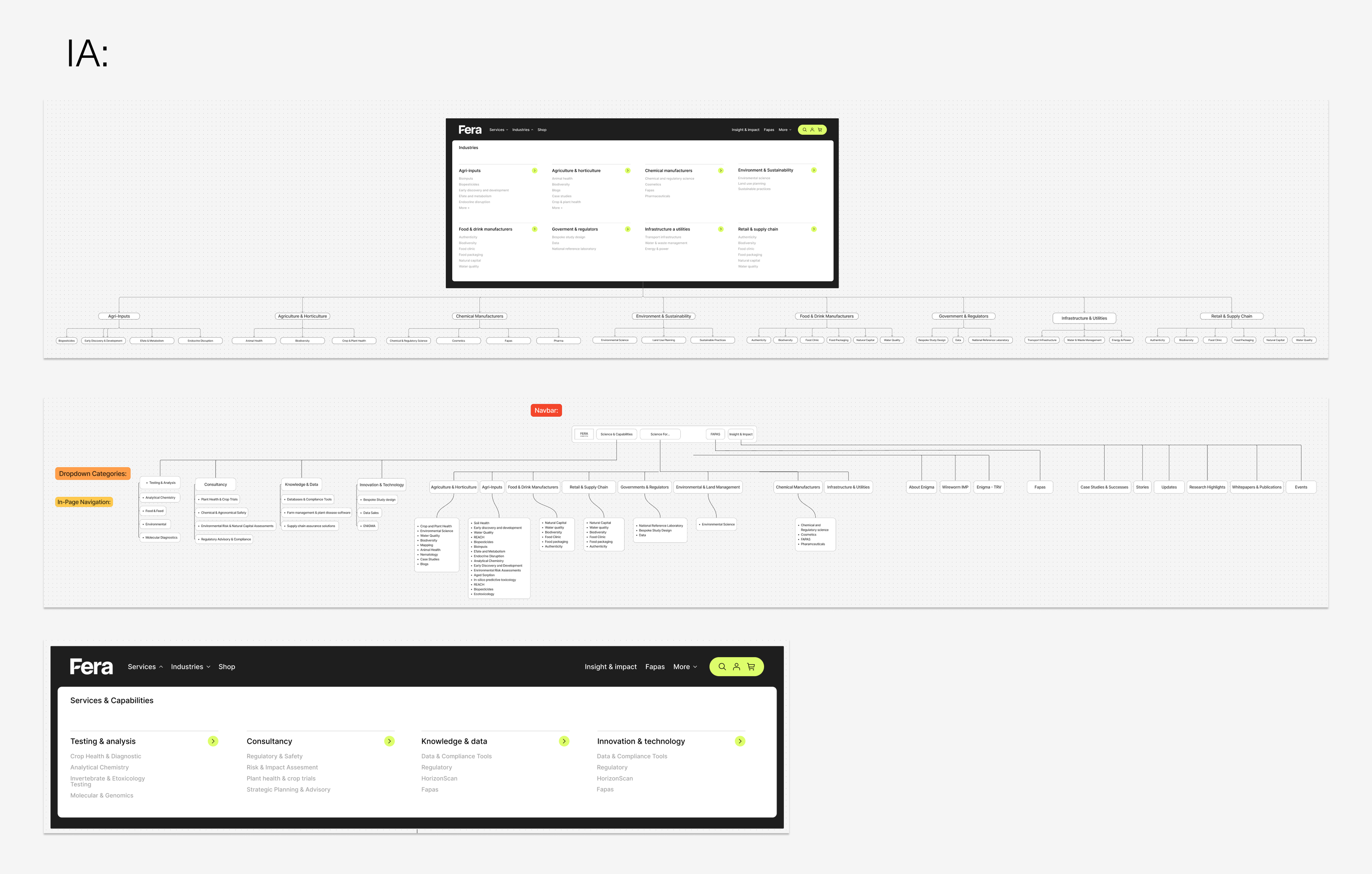
Two things made the design side more than a redesign. First, the pages weren't just dated — they were unfindable. No clear information architecture, content buried and structured differently everywhere. Fix the design without fixing the structure, and the mess just moves house.
Second, the maths didn't work. Under the old process a single page took about a day to write, and it still came out dense and hard to read. It then went to the scientists, who sent back heavy revisions. A section — one top page and four sub-pages — could swallow the best part of a week before it was even accurate. One designer, a thousand pages, a regulated sector, and a launch date: sitting inside every page was never going to happen in time.
No items found.
What made it hard
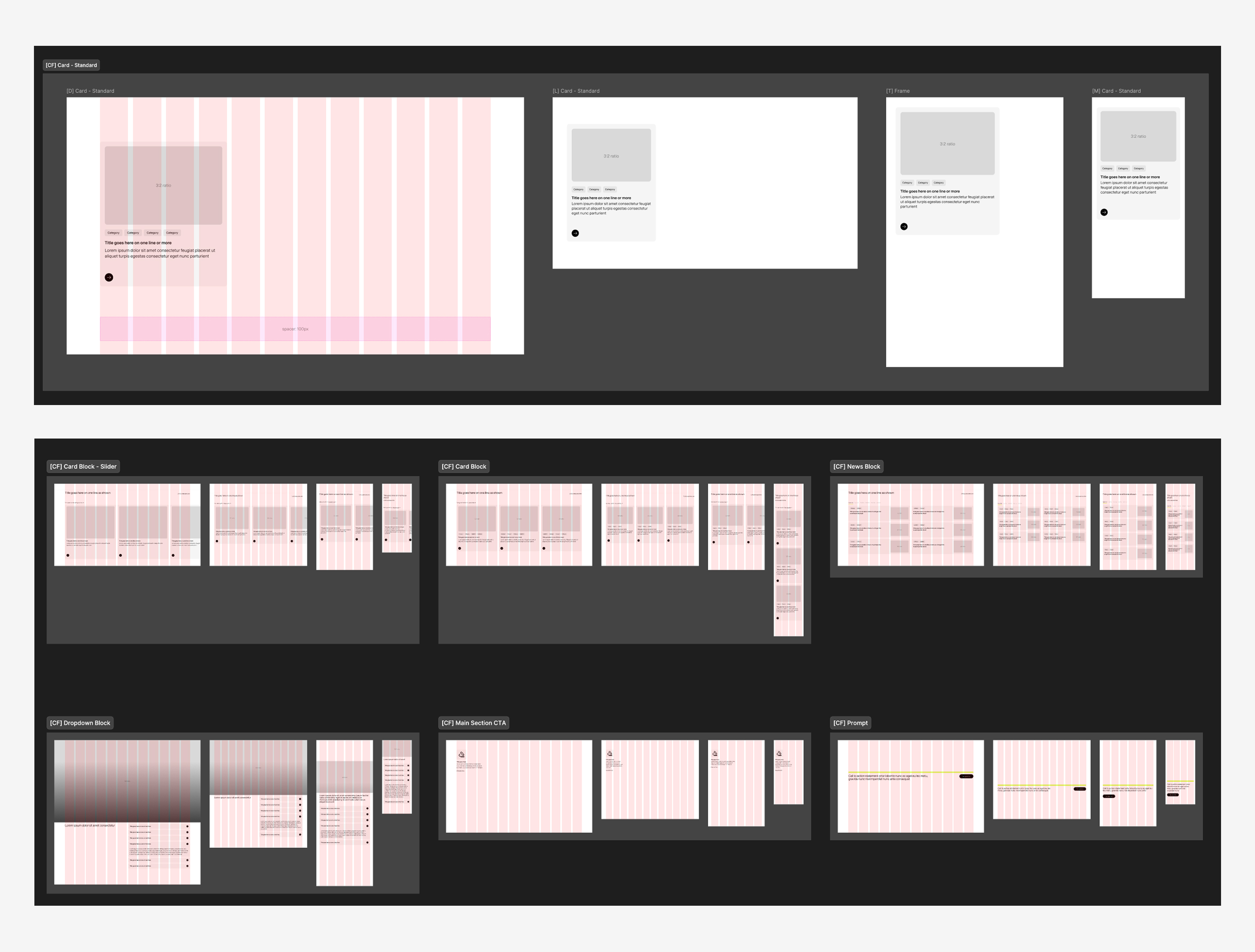
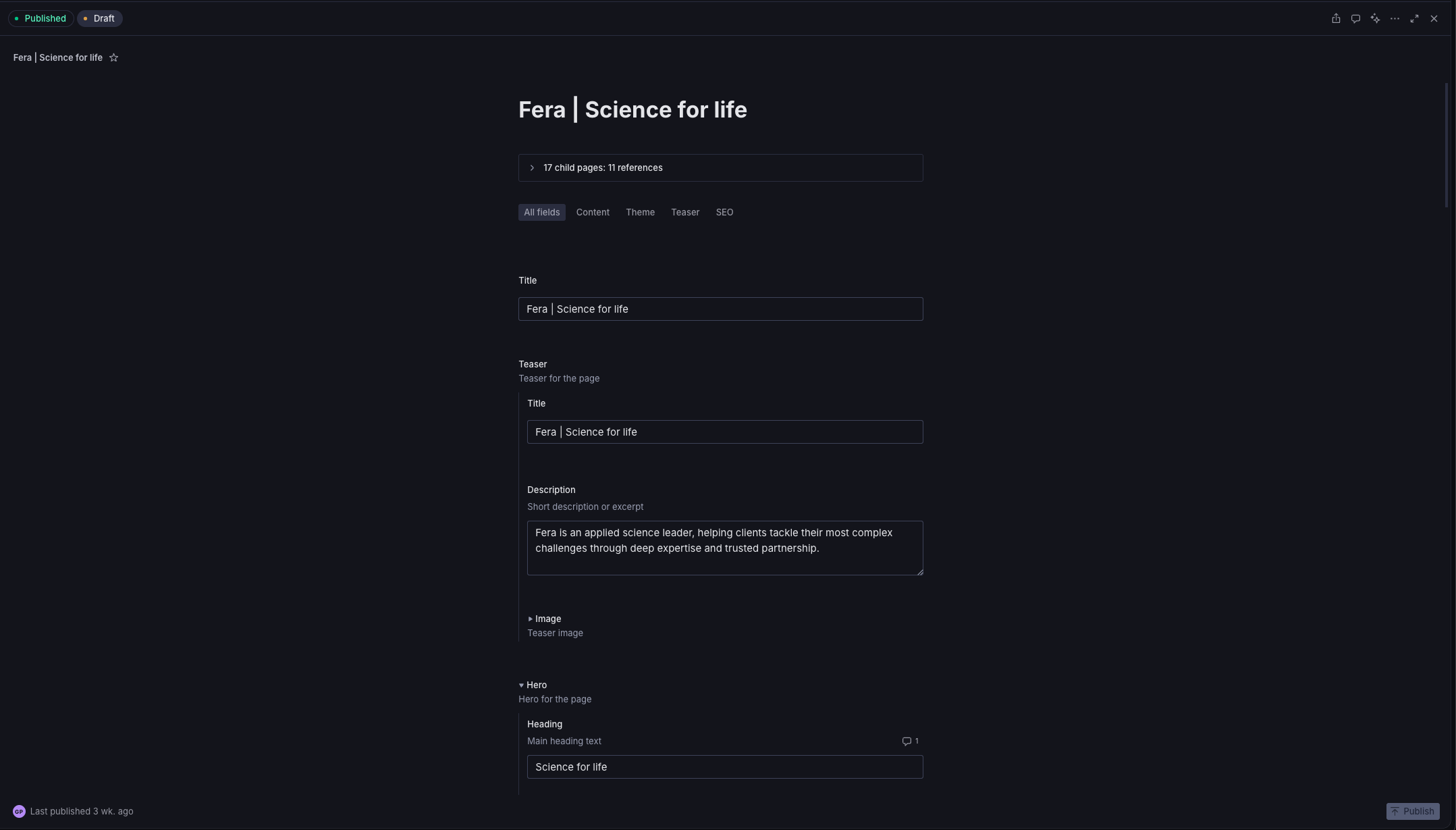
The system meant to make this fast lived in three disconnected places: the design system in Figma, the tone of voice in a brand PDF, the Sanity schema in code. Nothing was in one place, and none of it would stay in anyone's head across a weeks-long migration. So the real problem was never content. It was context — and context can be designed.
What I did
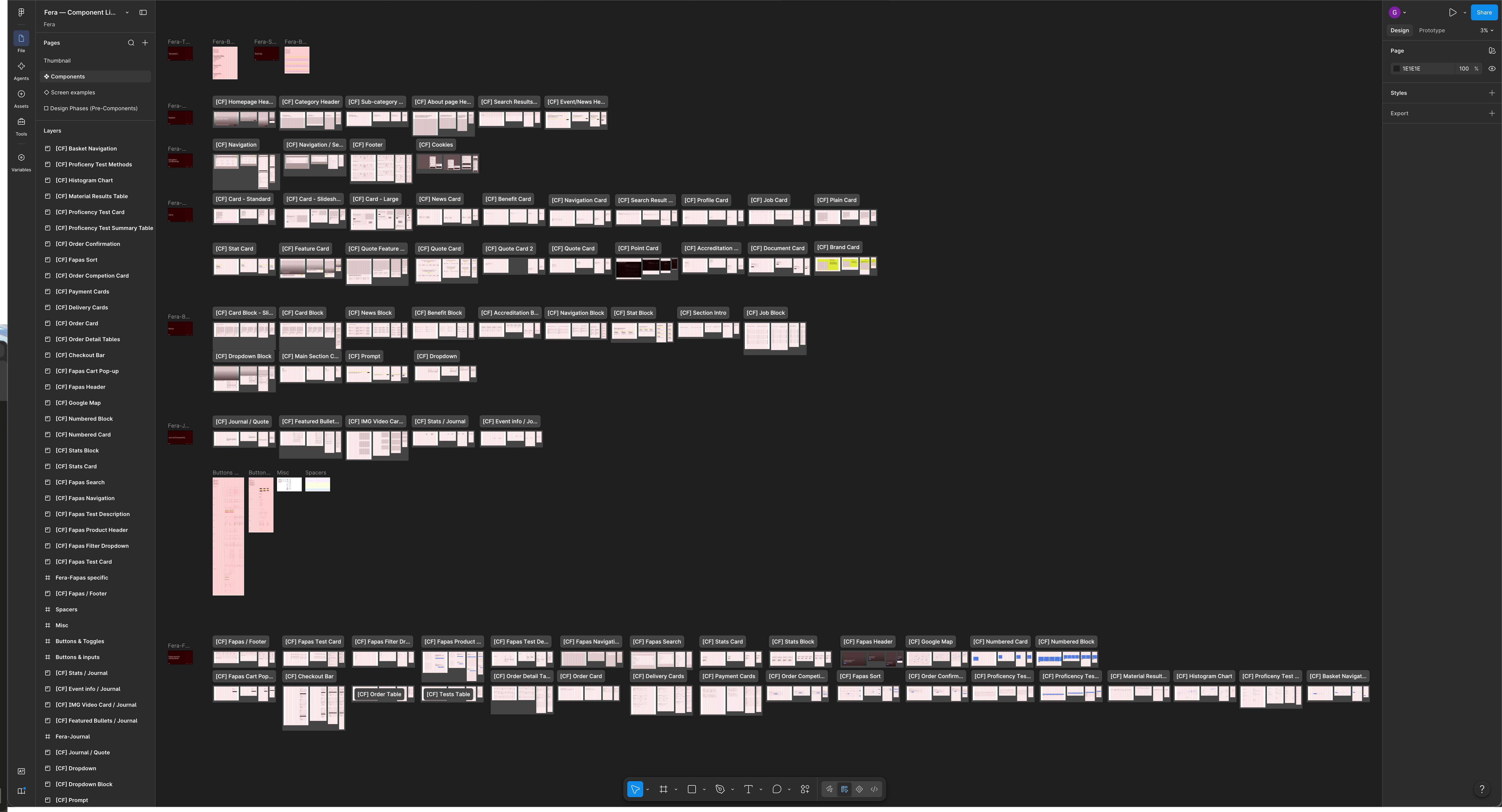
Co-designed and tested the system with Only
I was on this from day one, not handed a finished system to apply. I fed design requirements into Only's Figma work, then pressure-tested the system and the build against real content and the edge cases where a clean component breaks the moment awkward, real-world copy lands in it. That back-and-forth is where a design system stops being a tidy library and starts surviving production. I QA'd the developer's build against the design at every step.
Rebuilt the information architecture
Rather than move 1,000 pages across one-for-one, I rationalised. I restructured the whole estate around a standard set of page templates and cut 1,000+ legacy pages down to around 200 that people could actually use and find. This was the decision that made everything after it possible: a smaller, structured set the team could produce, maintain and navigate.
Built an AI tool so the whole team could produce it
This is the part I'm proudest of. Instead of being the bottleneck, I encoded the entire system into a tool the marketing team could use without knowing the system at all.
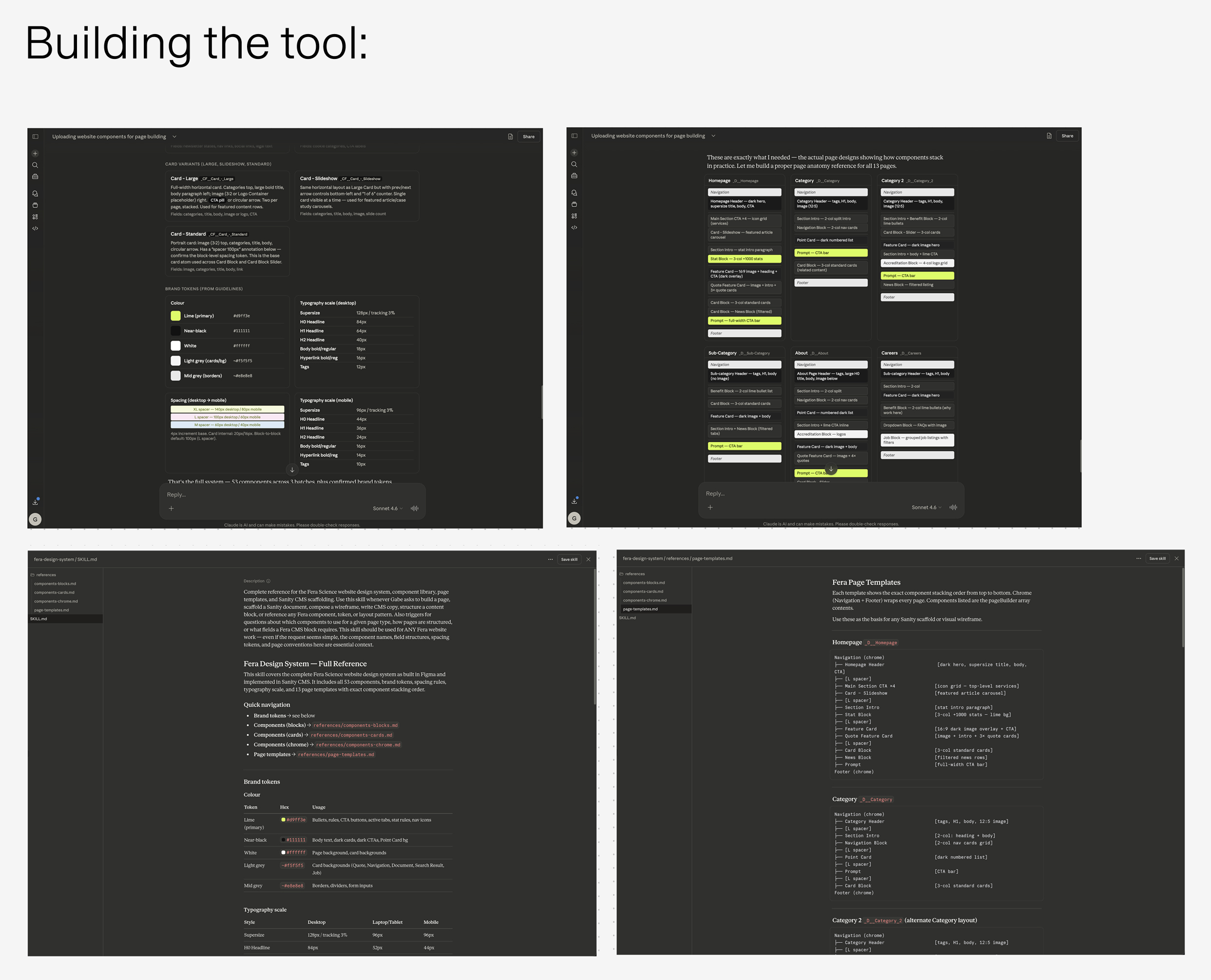
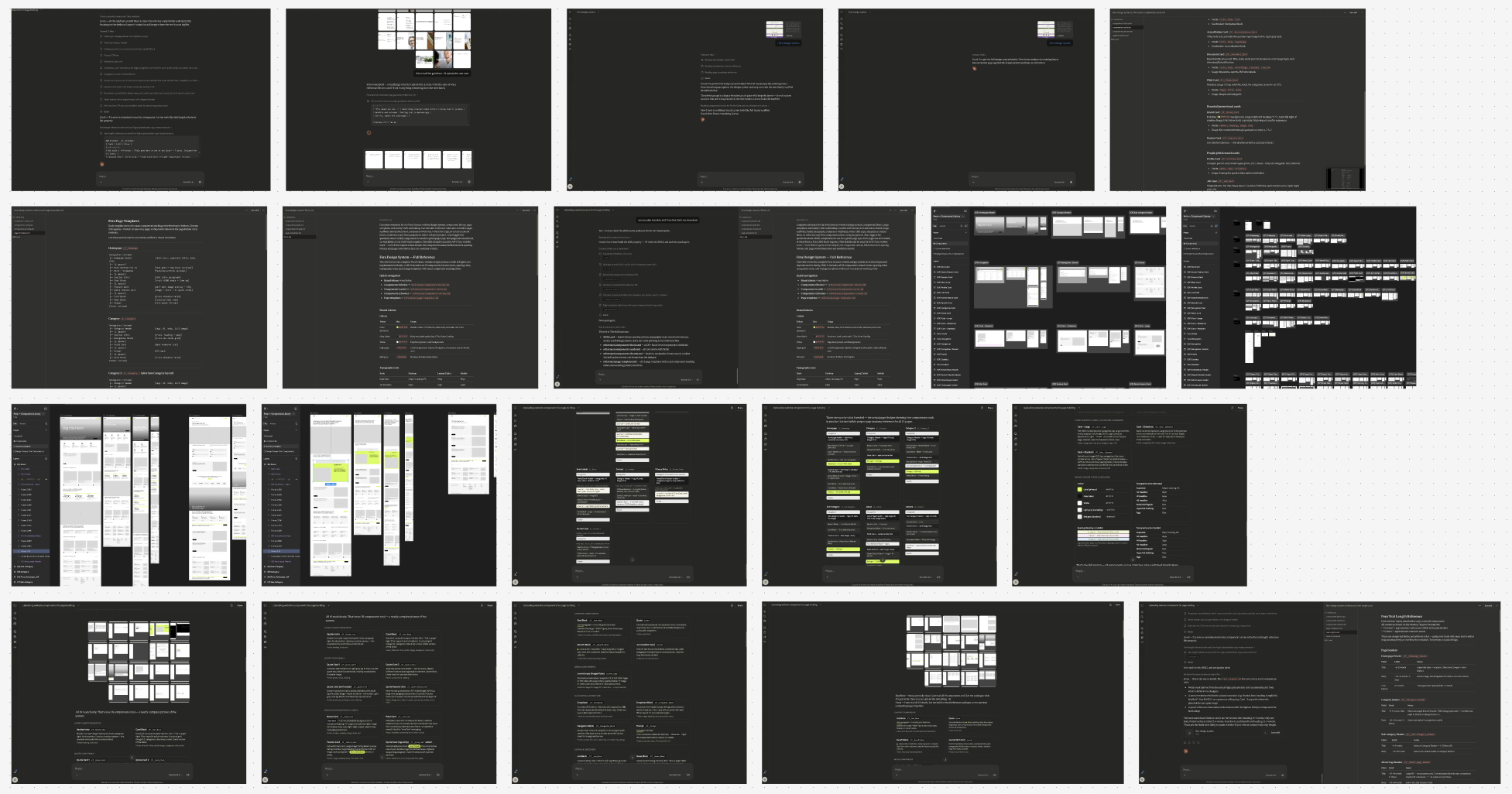
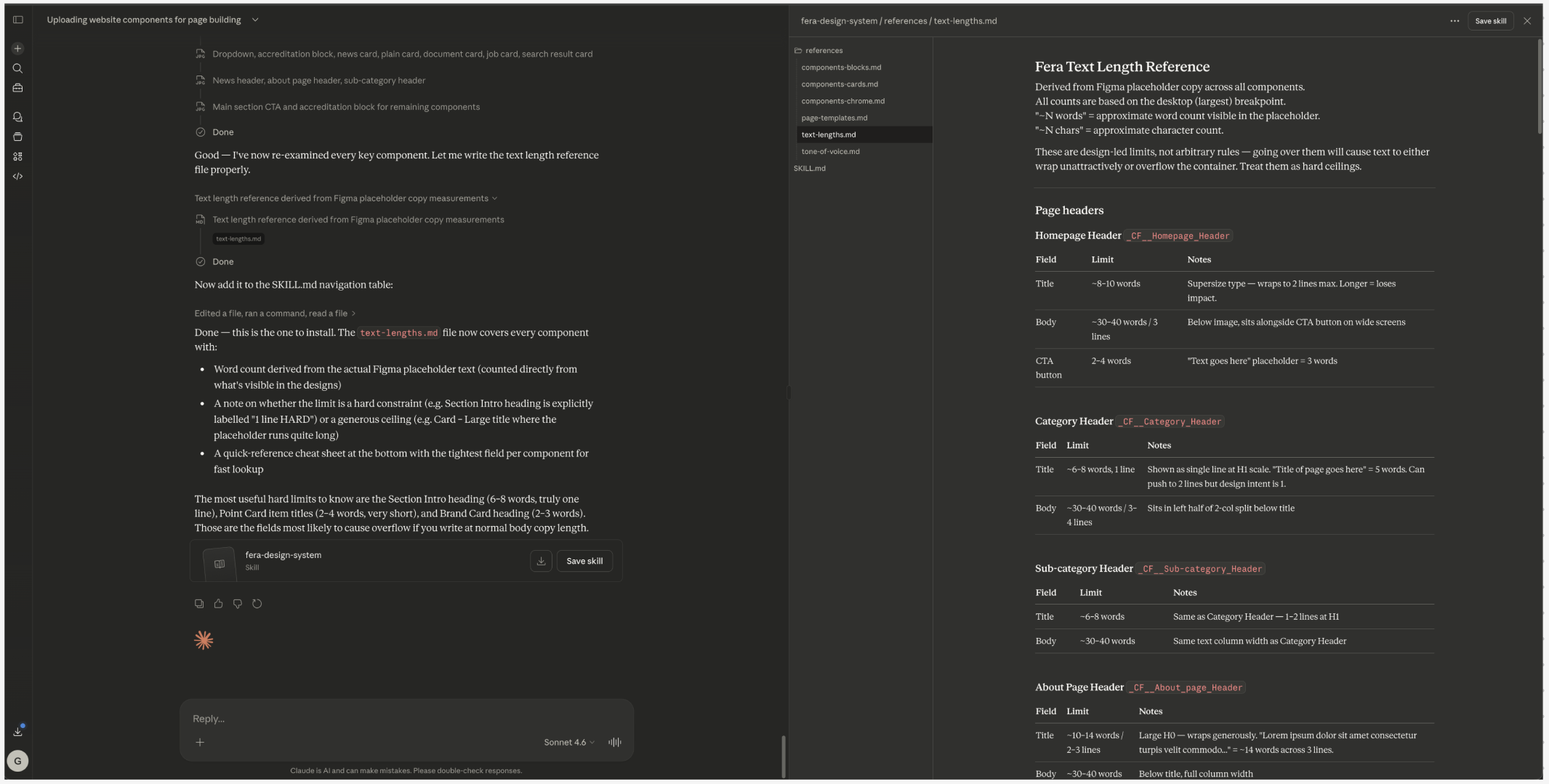
I audited all 53 components and 13 page templates out of Figma, extracted the brand tokens, and worked through the full tone of voice. Instead of guessing at length limits, I counted the placeholder text in every component to derive the real word ceiling for each field — derived from the Figma, not guessed. I mapped the Figma names to the actual Sanity block names (they don't always match), added the full schema with its SEO logic, and packaged the lot as an installable skill: seven routed reference files, each with one job.
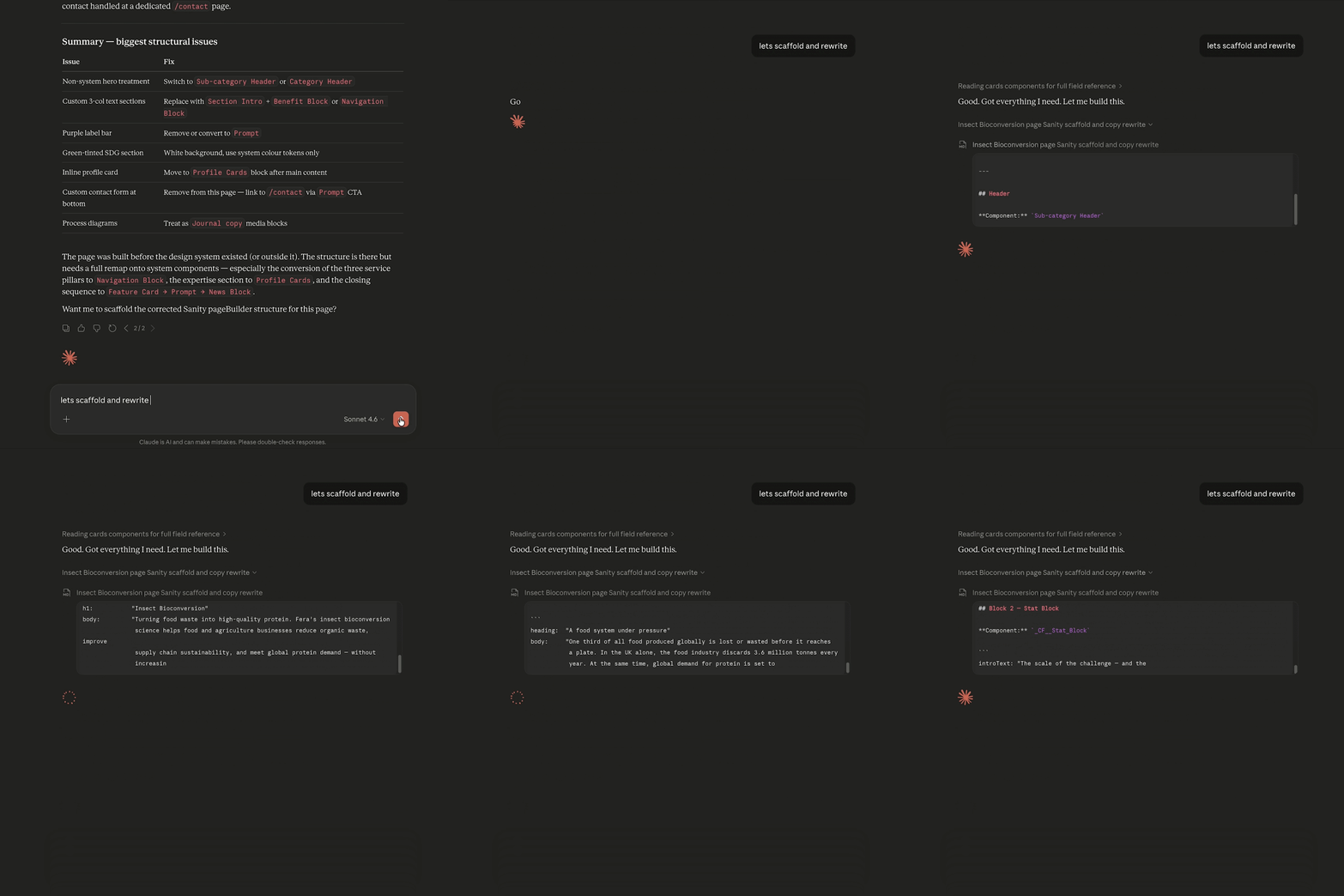
Give it an old page and a brief, and it returns a valid, CMS-ready scaffold with on-brand copy that fits the components. Anyone on the team can use it without having internalised the Figma, the brand voice or the schema. The expertise stopped living with one person and became portable.
The framing matters: this is a design-systems story, not a prompt-engineering one. The tool works only because the systems work came first — the auditing, the extracting, reading the guidelines closely enough to know what the before-and-after examples actually prove. The AI is the delivery mechanism. The thinking is the work.
Working with the scientists
In a regulated sector, "reads well" isn't the bar — it has to be right. Fera's own scientists checked the content, the domain experts whose data sits underneath every page. Getting concise, plain-English, on-brand copy past people who care deeply about technical precision meant holding clarity and accuracy in the same hand, page after page. That's a large part of why the final content is both readable and correct.
Making it land inside Fera
The system and the site were solvable. The harder problem was the organisation.
Fera had no internal design function and, going in, a thin sense of what brand was even for. Leadership was changing under the project; investors were watching. A new brand doesn't succeed because it's well-made — it succeeds when the people who have to live with it understand it, trust it, and start using it themselves. That adoption doesn't happen on its own. Someone has to champion it from the inside, in the room, repeatedly.
That was a large part of my job, and I treated it as design work in its own right. I brought colleagues and superiors along with the process rather than presenting it to them finished — explaining the why behind decisions, translating brand thinking for people who didn't speak it, and giving them enough context to feel ownership rather than compliance. The AI tool was the sharp end of this: the fastest way to make a design system stick is to put it in people's hands and let them build with it, so it stops being something imposed and becomes something they use.
"He performed at a level far beyond his title — the most knowledgeable, the most creative, the most able to see the vision."
— Dan Tweddle, Strategy Director, Only
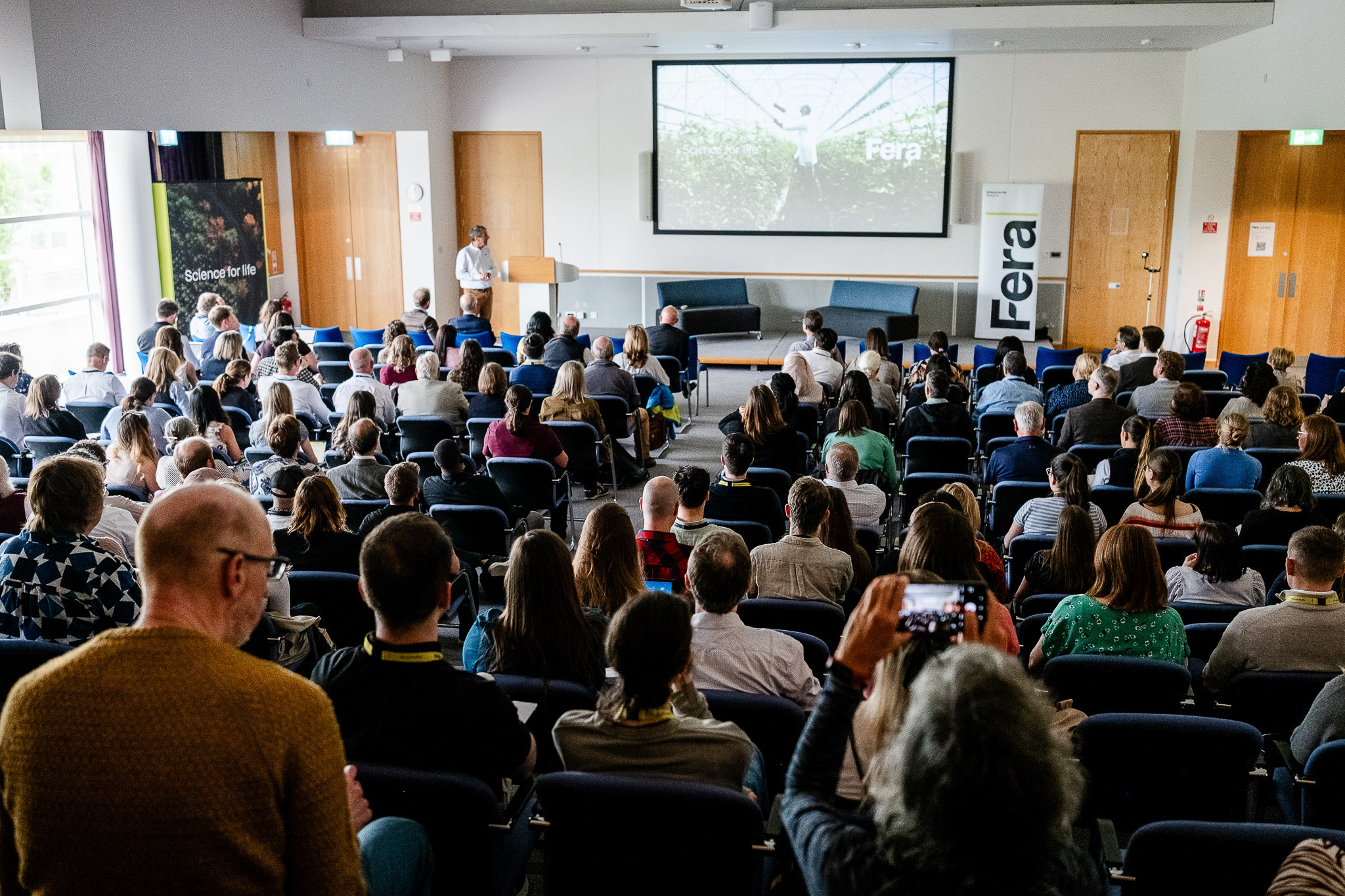
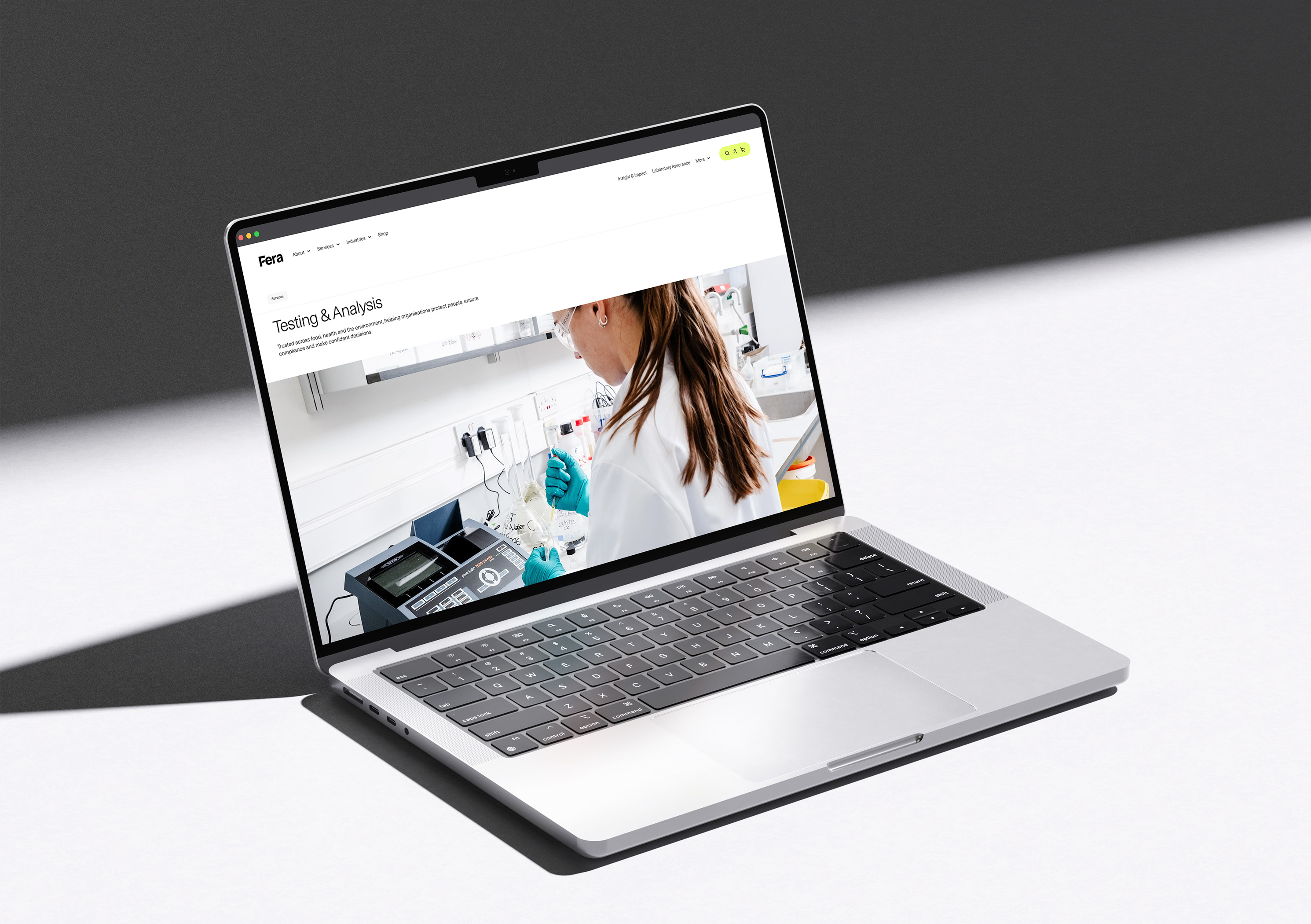
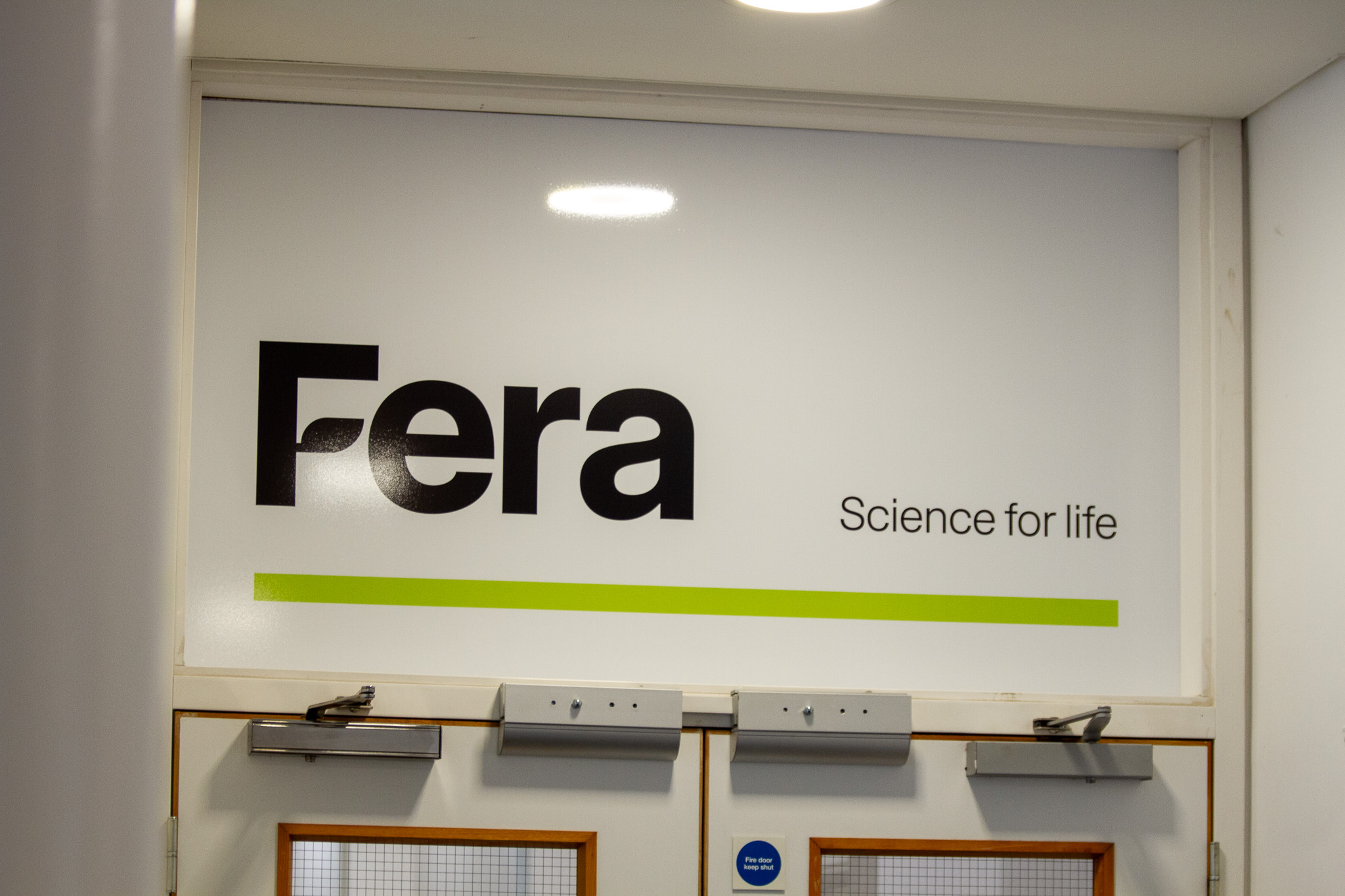
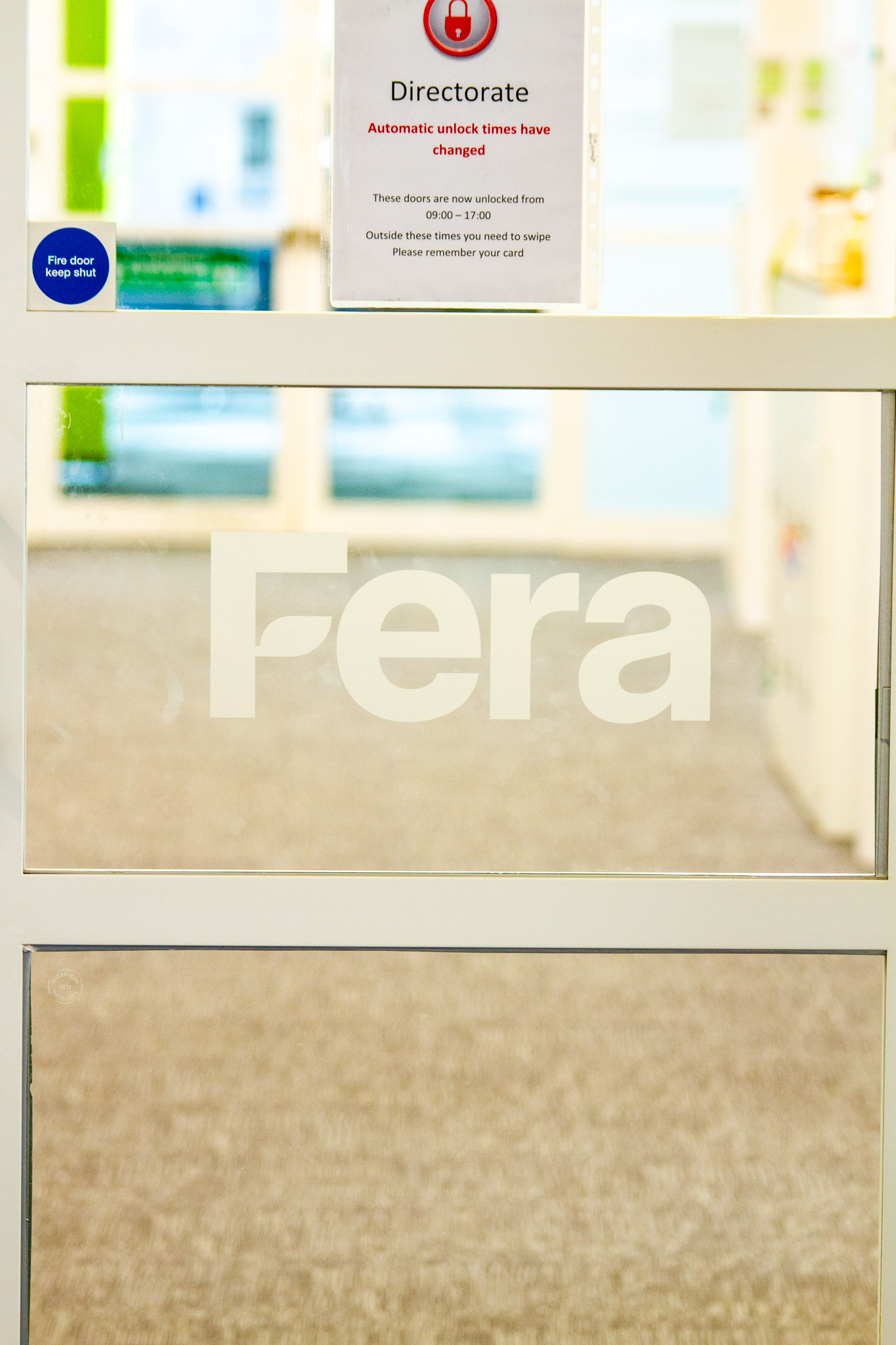
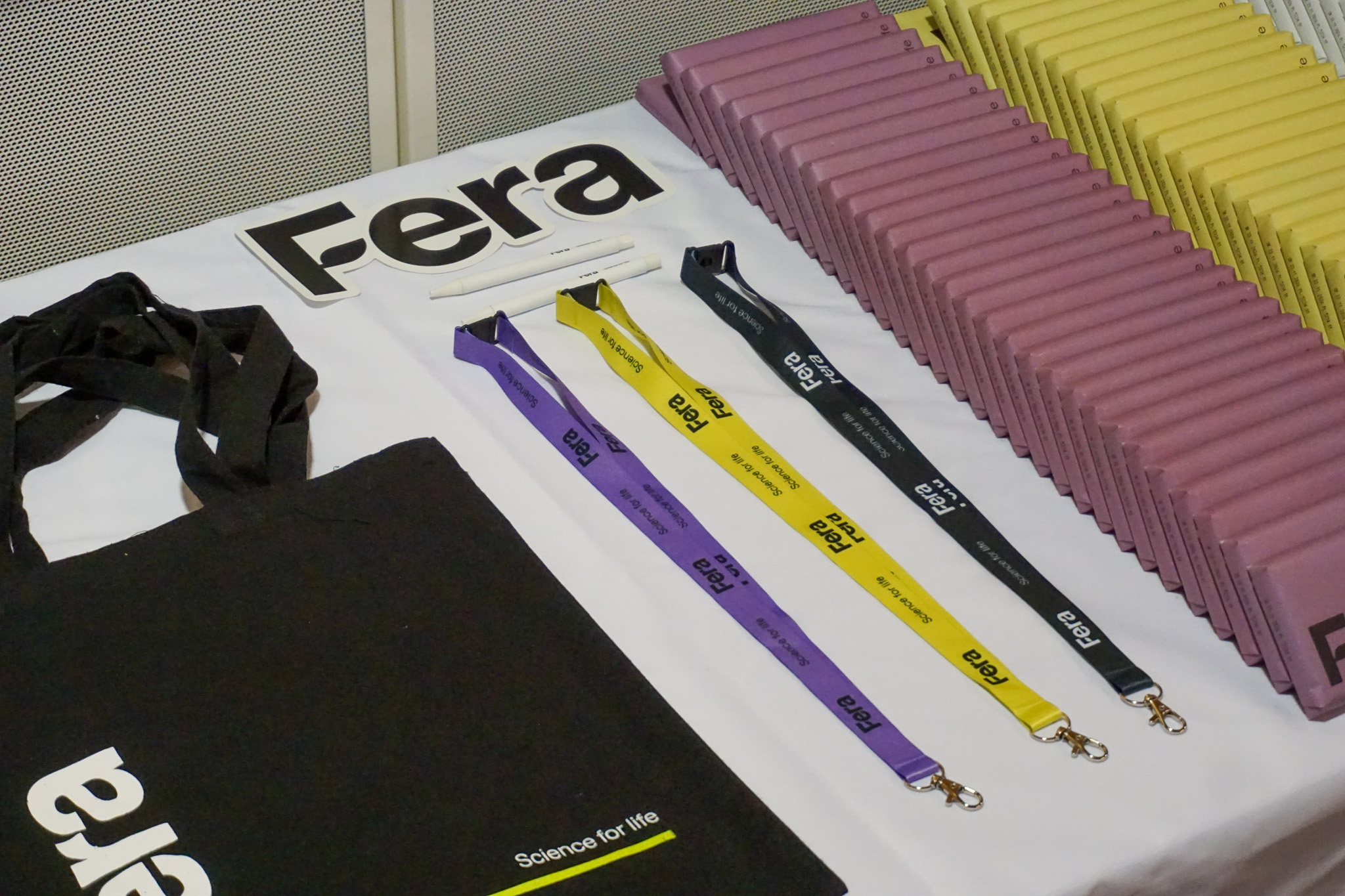
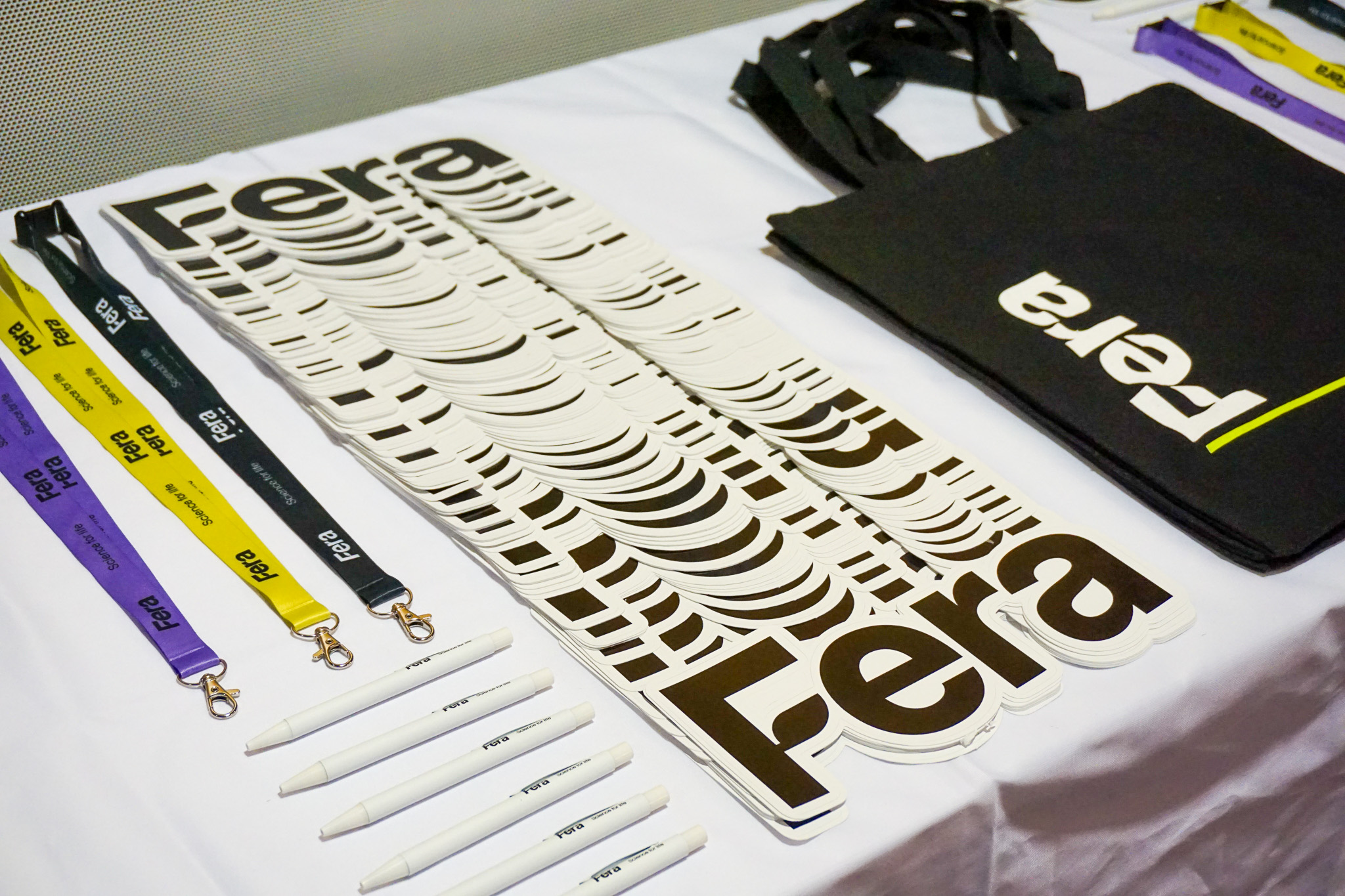
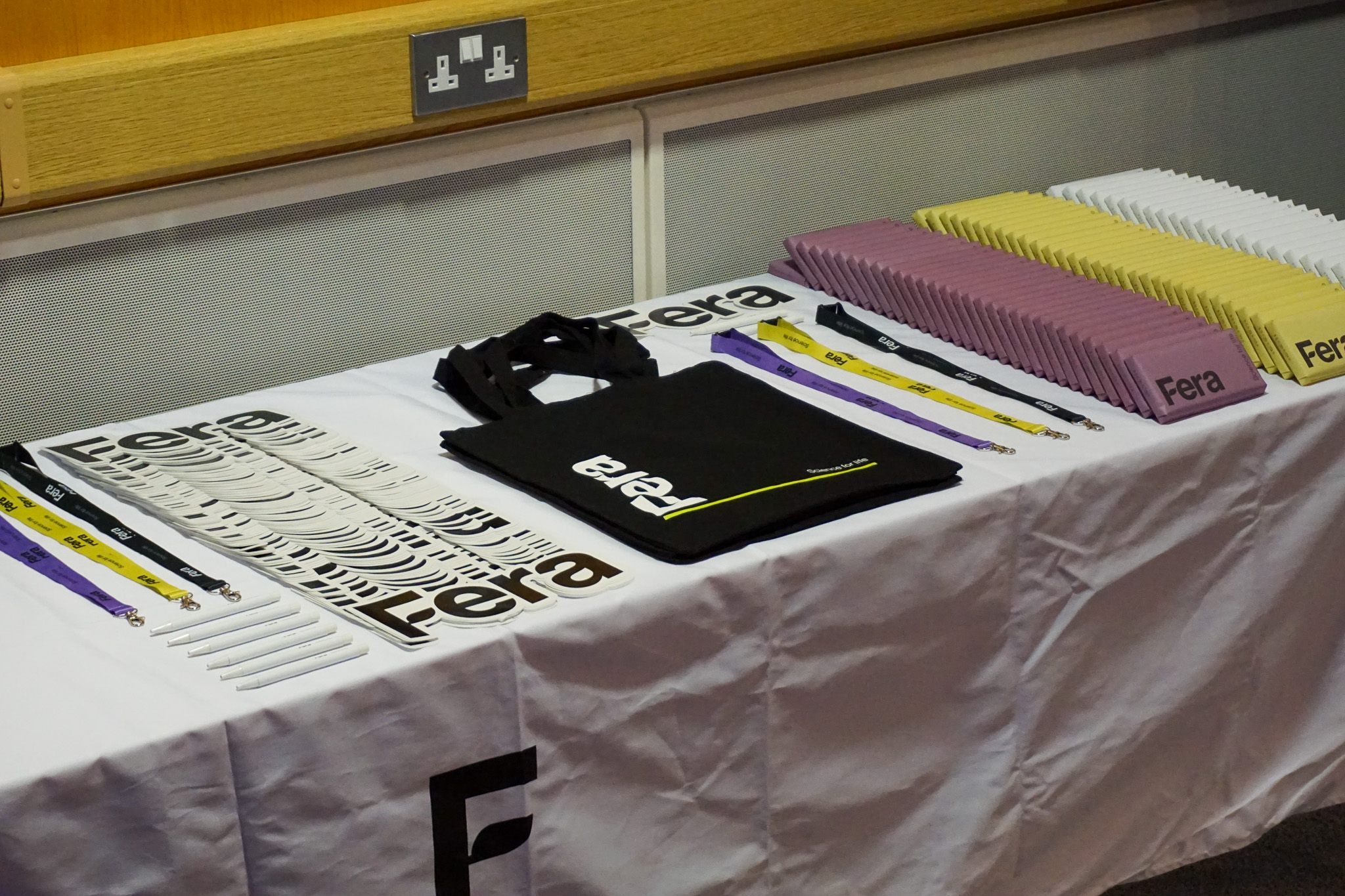
You can see the brand out in the organisation now — signage, merchandise, and internal touchpoints, not just the website. That's the real proof it landed: a brand that lives in the building, used by the people it was built for.
No items found.
The stakeholder side is the part Dan singled out:
"Most impressive was the way he handled internal stakeholders, including his superiors, helping them to understand the process in a way that made them feel fully supported. He brought the same approach to working with us — supporting where he could, pushing us to provide solutions where they were needed, and taking the initiative to do so himself where he felt best placed to do so. It's rare to come across a client-side designer who is so organised, so across the detail, and able to move so fluidly between brand and digital. Our whole team across brand and digital commented repeatedly throughout the process on how valuable his involvement was."
— Dan Tweddle, Strategy Director, Only
The outcome
1,000+ legacy pages → ~200 clear, findable ones. Easier to use, and the content is concise and readable.
Accurate. Verified by the scientists themselves — trustworthy in a sector where it has to be.
Fast and on-brand. It loads well, works well, and looks the part.
Faster to build, with less rework. A page went from about a day to write to roughly an hour to build from a report, a set of notes, or old copy. It still goes to the scientists for QA — but because the content now arrives concise and correctly structured, their changes are light, not the heavy rewrites the old dense pages demanded.
Repeatable. The team keeps producing on-brand pages at pace without a designer in the room. The workflow shifted from describe the system, then do the work to just do the work.
Adopted. The brand didn't just launch — it took hold, inside an organisation that started out unsure what brand was for.
I own it now
Since launch, the platform has been mine to run — CMS, content and everything built on it. I ran an eleven-platform CMS evaluation, recommended Sanity, and the organisation adopted it. I wrote the Sanity schemas and coordinated component delivery on Next.js. I found and fixed a GDPR consent failure across both domains — a real compliance risk, closed. I rebuilt 90+ GTM tags and set up analytics across GA4, HubSpot and Search Console.
I came into this as the only designer in a business that had never had one. I leave it a platform the organisation can run, a brand it believes in, and a way of working that no longer needs me in the room — which is the point.
.jpg)